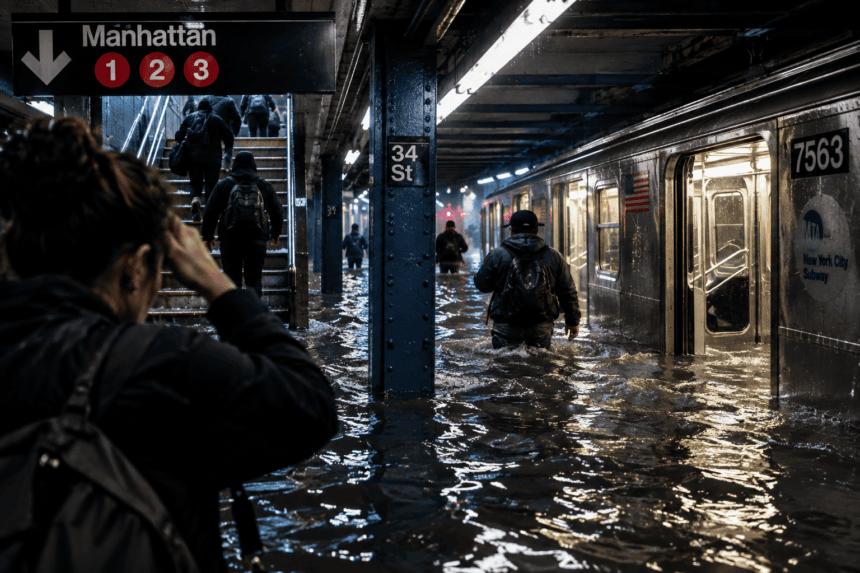
The Metropolitan Transportation Authority (MTA) is fighting a losing battle against the sky. As extreme weather events become the city’s new baseline, New York’s century-old subway tunnels—designed for a different era of climate stability—are facing an existential threat from flash flooding.
The system wasn’t built to be a submarine. When remnants of Hurricane Ida tore through the city in 2021, the water didn’t just pool on the tracks; it turned the subterranean network into a high-speed river. That event cost the MTA nearly $100 million in damages. It also shattered the illusion that the city’s aging infrastructure could simply be patched up.
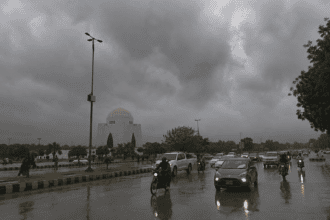
Engineers are now racing to install flood gates, elevated entrances, and high-capacity pumps at vulnerable stations. The problem? The sheer volume of water currently hitting the streets during a “once-in-a-century” storm—which now seems to occur every few years—often exceeds the capacity of the city’s drainage systems entirely. When the streets flood, the subway tunnels become the drain.
“We are essentially retrofitting a Victorian-era system to survive a tropical climate,” said one transit engineer familiar with the current hardening projects. “You can add all the flood gates you want, but if the street-level infrastructure can’t hold the water, gravity is going to win every single time.”
The financial burden is staggering. The MTA’s 2020-2024 capital program includes billions for resiliency, yet inflation and supply chain delays are eating into those budgets. Each project, from sealing subway grates to reinforcing power substations, takes years to complete. Meanwhile, the climate models are shifting faster than the construction crews can work.
Commuters are already feeling the cost. Service disruptions are no longer just about mechanical failures; they are increasingly about water management. A single hour of intense rain can now trigger system-wide delays that ripple across the entire city, forcing the MTA to shut down lines as a precaution.
The city is trying to buy time, but the math is grim. The subway system’s backbone—the century-old tunnels under the East River and through Manhattan—remains the most vulnerable. These aren’t just transit lines; they are the arteries of the regional economy. If the water gets high enough, the city stops.
For now, the MTA is betting on a mix of technology and better forecasting. They’ve installed sensors that provide real-time water levels, allowing them to pre-position crews. It’s a tactical shift from trying to prevent the water from entering to simply managing the damage once it does.
It is a reactive strategy for a problem that is becoming permanent. As the sea levels rise and the storms intensify, the question facing New York isn’t how to fix the subways, but whether the current system can survive the century.