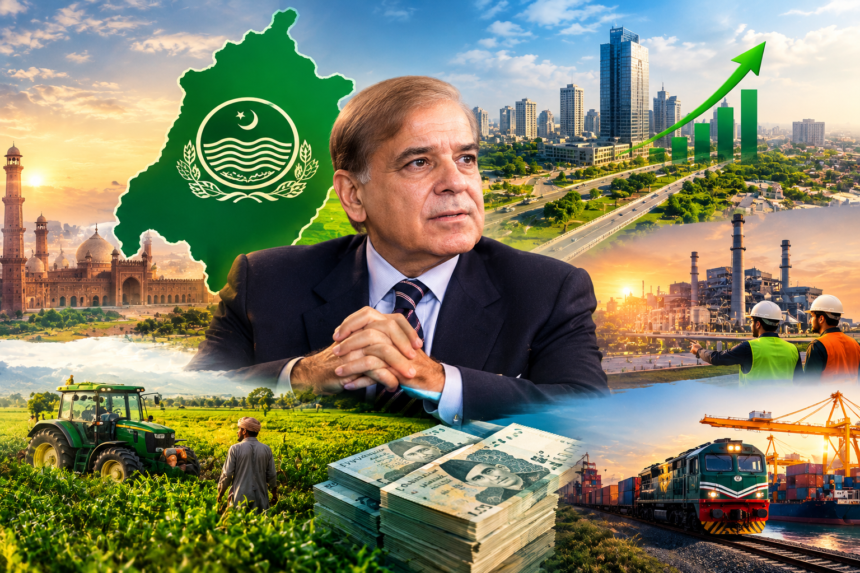
The Punjab government has launched a massive Rs. 1,089 billion economic transformation program, aiming to overhaul the province’s fiscal landscape through aggressive infrastructure development and sector-specific industrial support.
Chief Minister Maryam Nawaz Sharif unveiled the initiative this week, framing it as a shift away from traditional budget-loading toward targeted economic stimulation. The package—which represents a significant portion of the provincial development outlay—seeks to stabilize growth in agriculture, manufacturing, and technology sectors.
The primary goal is clear: increase the province’s GDP contribution while insulating local industries from the volatility of federal fiscal policy.
Critics, however, are already questioning the funding mechanism. Financing a project of this magnitude requires a delicate balance between internal revenue generation and external borrowing. Skeptics point to the province’s existing debt obligations and ask how the administration plans to avoid further inflationary pressure.
“This isn’t just about spending money; it’s about restructuring how the province earns it,” a senior official in the Planning and Development Board said. He declined to offer specific details on the tax-to-GDP targets, noting that the “mechanics are still being refined.”
The program prioritizes three core pillars:
* Agricultural Modernization: Subsidies for high-tech irrigation and seeds to boost export-grade crop yields.
* Industrial Zones: Tax incentives for firms moving into new special economic zones to curb urban unemployment.
* Digital Infrastructure: Expansion of high-speed connectivity to secondary cities to attract service-sector investment.
The strategy marks a departure from the previous administration’s focus on short-term relief projects. By shifting toward long-term capital expenditure, the government hopes to create a sustainable revenue stream that reduces reliance on federal handouts.
Whether this capital injection will actually manifest as tangible economic stability or simply add to the provincial deficit remains the central point of contention. For now, the administration has committed to a phased rollout, promising quarterly audits to ensure the funds are tracking against economic performance targets.
The success of this plan hinges on execution. With the current economic climate testing the resilience of every province, the Punjab government has little room for waste.