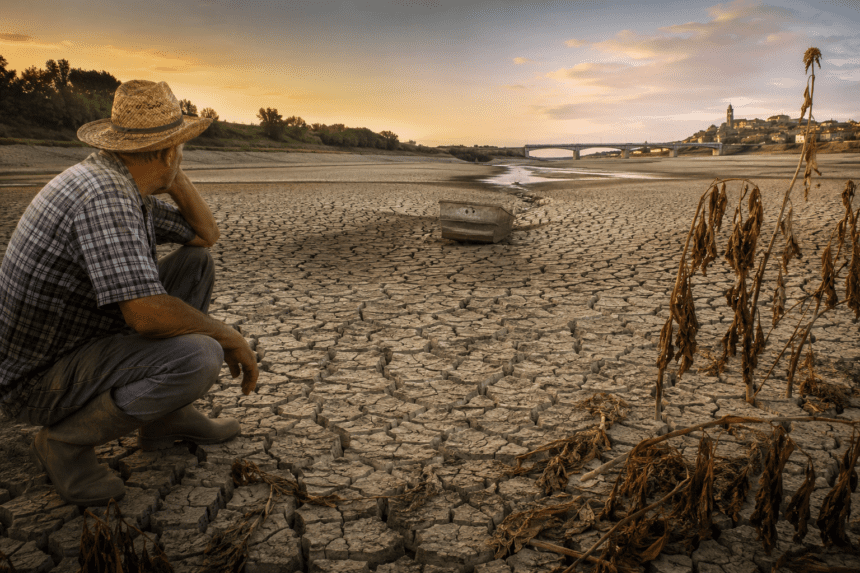
The Po River is at its lowest level in seventy years, and for the farmers across Italy’s northern plains, the water isn’t just low—it’s disappearing.
The country’s longest waterway, which feeds the fertile Po Valley, has transformed into a series of stagnant, muddy pools. Saltwater from the Adriatic Sea is pushing miles inland, poisoning the soil and killing off rice paddies that have sustained the region for generations.
“We are watching our livelihood turn to salt,” said Marco Trovati, a third-generation rice farmer near Pavia. He hasn’t seen a significant rainfall since December. “The irrigation canals are bone dry. If the rain doesn’t come by next week, the entire harvest is gone.”
The stakes go beyond local produce. The Po Valley is the engine of Italy’s agricultural economy, producing nearly 40% of the nation’s food, including wheat, corn, and the rice used for risotto. With irrigation systems failing, analysts warn that food prices—already climbing due to global supply chain pressures—are set to spike again.
Government officials in Rome have declared a state of emergency across five northern regions, but local authorities say the aid is arriving too late. Reservoirs meant to buffer against dry spells are hovering at 20% capacity. Hydroelectric plants have been forced to shut down in several provinces, tightening the grip on an already strained energy grid.
Climate scientists point to a “perfect storm” of a record-breaking winter drought followed by an early, blistering heatwave. The lack of snowpack in the Alps—the primary source for the Po—means there is no meltwater coming to replenish the riverbed this summer.
The crisis has exposed the fragility of Italy’s aging water infrastructure. Decades of neglected canal maintenance and outdated irrigation techniques mean that even when water is available, much of it is lost to leaks before reaching the fields.
While the cabinet debates emergency funding, the farmers on the ground aren’t waiting for a political solution. Many are drilling illegal wells in a desperate bid to save their crops, while others have simply stopped planting.
As the sun beats down on the cracked earth, the river that once defined the landscape has become a warning. For the people of the Po Valley, the drought is no longer a seasonal risk—it’s a permanent shift in their way of life.