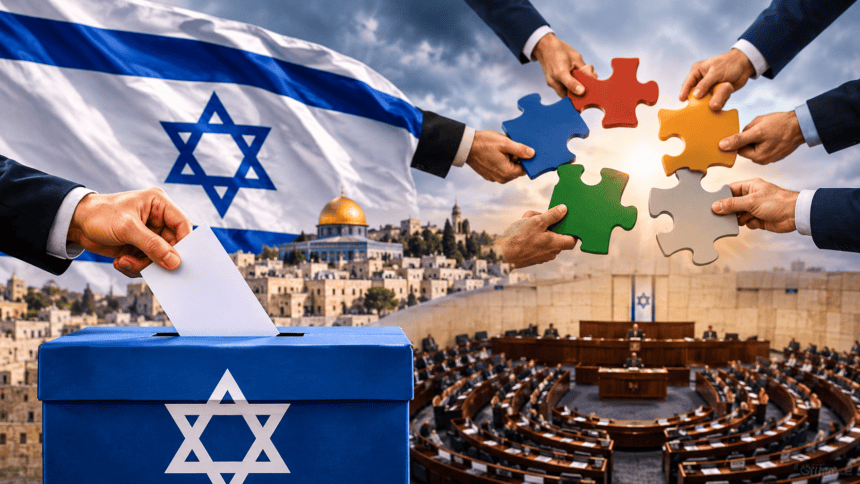
Israel’s latest election cycle has once again failed to produce a decisive mandate, leaving the country’s political future in the hands of backroom negotiators. No single party secured the 61 seats required for a parliamentary majority, forcing leaders to abandon ideological purity in favor of survival.
The deadlock centers on the inability of the two primary blocs to bridge deep-seated divides. Prime Minister Benjamin Netanyahu’s Likud party remains the largest individual faction, but his path to power relies on a volatile alliance with far-right and ultra-Orthodox partners. These smaller parties are holding the keys to the cabinet, demanding significant concessions on judicial reform and military exemptions that threaten to alienate moderate voters.
On the other side, the opposition coalition is a collection of disparate interests united only by the desire to unseat the incumbent. Their challenge is the “math of necessity.” To form a government, they must bring together secular liberals, traditionalists, and in some scenarios, Arab-majority parties. Each of these groups holds veto power over the others, creating a structure that is prone to collapse before it even takes the oath of office.
The stakes go beyond simple party politics. Israel’s economic policy, ongoing security challenges, and international standing are currently in a holding pattern. Civil servants are managing day-to-day operations under a caretaker government, but long-term strategic decisions—including defense spending and regional normalization efforts—are stalled.
Key negotiators are currently huddled in private meetings, trading ministerial portfolios for legislative promises. The ultra-Orthodox parties are prioritizing budget allocations for their educational institutions, while the far-right factions are pushing for an aggressive expansion of settlement policy in the West Bank. If these demands are met, the incoming government will face immediate pressure from international allies, including the United States, who are wary of a sharp shift in Israeli policy.
If these talks fail, Israel faces the prospect of a fifth election in under four years. The electorate is showing clear signs of exhaustion; voter turnout in key districts has fluctuated, reflecting a growing disillusionment with a system that seems incapable of producing a stable government.
For now, the country waits for a signature on a coalition agreement. But even if a deal is reached, the narrow margins suggest a government that will spend more time managing internal disputes than governing the state. In this environment, the only certainty is that the next crisis—political or otherwise—is already on the horizon.