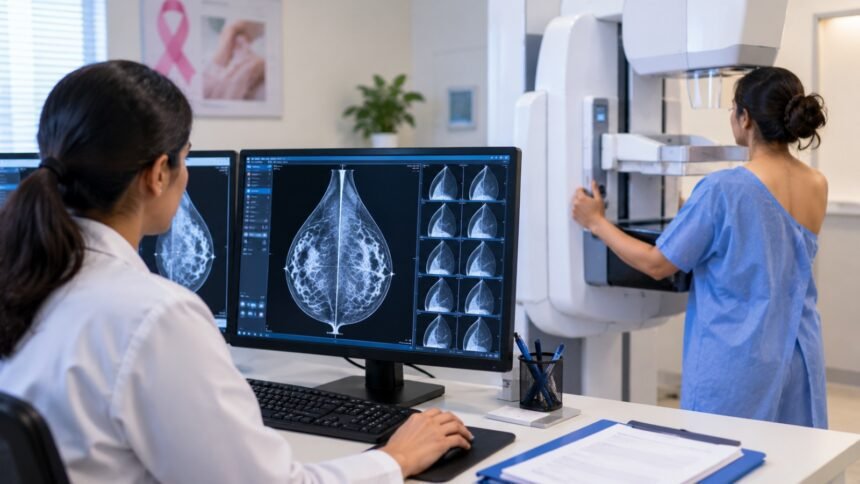
A large clinical trial has found that digital breast tomosynthesis, an advanced form of breast imaging, may help reduce the number of invasive breast cancers diagnosed between routine screening appointments. However, the difference between this method and standard digital mammography was not statistically significant over the full two-year follow-up period.
The findings come from the TOSYMA-2 trial, which analysed screening results from nearly 99,000 women aged 50 to 70 across 17 screening centres in Germany. Researchers compared digital breast tomosynthesis combined with computer-generated 2D mammography images with standard digital mammography.
Digital breast tomosynthesis takes multiple low-dose X-ray images of the breast from different angles, allowing specialists to examine breast tissue in greater detail. This may help reduce the problem of overlapping tissue hiding abnormalities.
Among women whose initial screening results were negative, invasive breast cancer was diagnosed within two years in 70 women in the tomosynthesis group, compared with 92 women in the standard mammography group. This represented 14.2 cases per 10,000 women in the tomosynthesis group, compared with 18.6 cases per 10,000 in the standard mammography group.
Although this amounted to a 24% relative reduction, the difference did not reach statistical significance. During the first 12 months, however, the rate was significantly lower in the tomosynthesis group.
Researchers also found that the combined screening approach had a higher sensitivity for detecting invasive breast cancer across the initial screening and subsequent follow-up period. The study’s authors noted that disruptions during the COVID-19 pandemic reduced recruitment, potentially limiting the trial’s ability to establish a statistically significant difference.
The findings suggest that advanced breast imaging could help identify more cancers during screening and potentially reduce cancers diagnosed between screening rounds. Further follow-up is planned to assess longer-term outcomes, including advanced-stage disease.
The results do not mean that any screening method can detect every cancer. Women should discuss appropriate breast cancer screening options and schedules with their healthcare professionals.