Astronomers have discovered new clues hidden within a distant galaxy, providing fresh insights into the formation and evolution of galaxies in the early universe. The latest research is helping scientists better understand how stars, gas, dust, and supermassive black holes shaped the cosmos billions of years ago.
Using observations from advanced space- and ground-based telescopes, researchers analyzed the galaxy’s structure, light, and chemical composition. The findings reveal previously unseen details about star formation, the movement of interstellar gas, and the processes that influenced the galaxy’s development over cosmic time.
Scientists believe the distant galaxy formed only a few billion years after the Big Bang, making it an important window into the universe’s early history. By studying light that has traveled for billions of years before reaching Earth, astronomers can effectively look back in time and observe how young galaxies evolved.
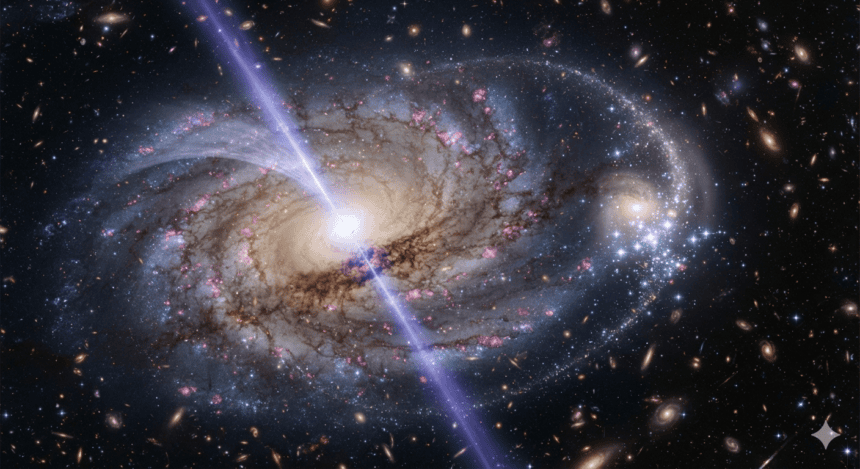
The research also identified regions of intense star formation, where vast clouds of gas and dust are collapsing under gravity to create new stars. At the galaxy’s center, astronomers found evidence suggesting the presence of a supermassive black hole, whose immense gravity may influence the motion of surrounding stars and gas.
Researchers say the galaxy’s chemical composition offers valuable clues about how the first generations of stars produced the heavier elements that later became the building blocks of planets and, ultimately, life.
The study demonstrates how modern telescopes and advanced imaging technologies continue to expand humanity’s understanding of the universe. Each new observation helps scientists refine theories about galaxy formation, cosmic evolution, and the large-scale structure of the cosmos.
Experts believe future observations by next-generation observatories will reveal even more about distant galaxies, bringing scientists closer to answering some of astronomy’s biggest questions about the origins and evolution of the universe.