A new fossil study has revealed fresh insights into Brachiosaurus, one of the largest and tallest dinosaurs ever to walk the Earth. The latest research is helping paleontologists better understand the giant herbivore’s anatomy, growth, feeding habits, and lifestyle during the Late Jurassic Period, around 154 to 150 million years ago.
Researchers examined newly discovered fossil bones, vertebrae, limb skeletons, and digital 3D models using CT scanning, biomechanical analysis, and advanced imaging techniques. The findings provide new evidence about how Brachiosaurus supported its enormous body and reached vegetation that other dinosaurs could not access.
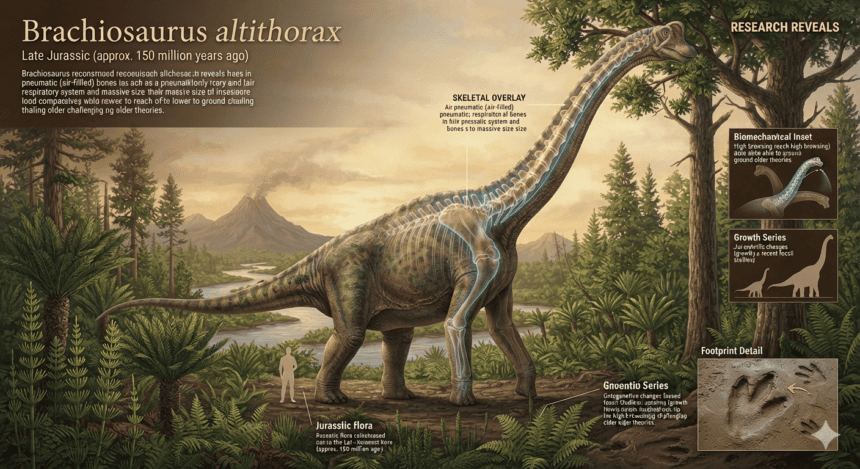
Brachiosaurus is best known for its exceptionally long neck, small head, and longer front legs, which gave its body a giraffe-like posture. Scientists estimate that an adult Brachiosaurus could grow up to 25 meters (82 feet) in length, stand over 12 meters (40 feet) tall, and weigh between 30 and 50 tonnes, making it one of the largest land animals in Earth’s history.
The study suggests that its long neck enabled it to browse leaves from the tops of tall conifer trees and other prehistoric vegetation without needing to rear up on its hind legs. This feeding strategy likely reduced competition with other plant-eating dinosaurs that fed closer to the ground.
Researchers also found new evidence that Brachiosaurus had a lightweight but incredibly strong skeleton, with air-filled bones similar to those of modern birds. These adaptations helped reduce body weight while maintaining the strength needed to support its massive size.
Scientists believe the dinosaur moved at a slow but steady pace, relying on its enormous size as protection against predators. Although adult Brachiosaurus had few natural enemies, younger individuals were likely vulnerable to attacks from large carnivorous dinosaurs.
Experts say every new fossil discovery improves our understanding of sauropod evolution and the ecosystems of the Jurassic Period. Future excavations and modern technologies are expected to reveal even more about how these gentle giants lived, grew, and interacted with their prehistoric environment.