For most, the ocean is a playground. For 21-year-old freediver Elias Thorne, it’s a sanctuary that saved his mental health. Now, he’s trading world-record attempts for reef restoration, aiming to give back to the waters that once gave him a sense of purpose.
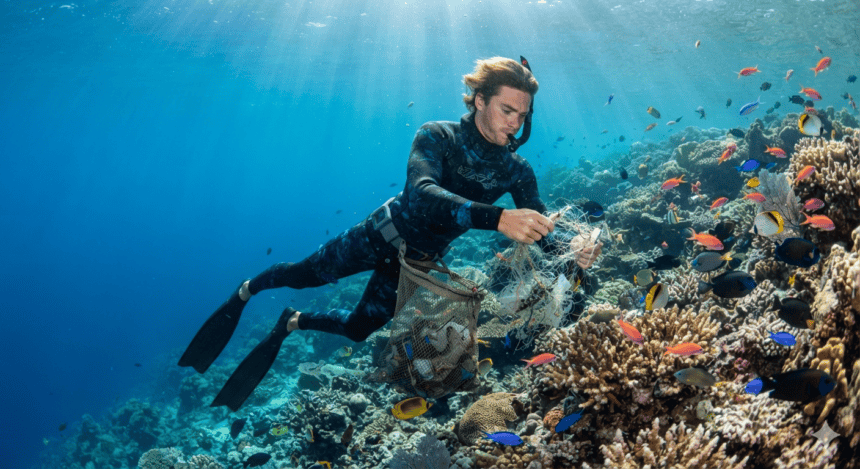
Thorne, who spent his teenage years chasing depth records in the Mediterranean, says the competitive circuit started to feel hollow. The silence of the deep—once his greatest escape—began to reflect the decline of the coral ecosystems he navigated on every dive. He isn’t just talking about conservation; he’s diving to plant heat-resistant coral fragments in areas once bleached to white bone.
“I spent years holding my breath to see how deep I could go,” Thorne said. “Now, I’m holding my breath to make sure there’s something left to see down there.”
The shift is a calculated gamble. Professional freediving is a sport of ego and metrics, where sponsorships depend on depth and duration. By pivoting to marine biology projects, Thorne is walking away from the financial stability of the competition circuit. He’s funding his “rebirth” project through a modest crowdfunding campaign and partnerships with local NGOs, working with his hands rather than his lungs.
Critics in the sport argue that his star power is better served promoting ocean awareness from the surface, but Thorne disagrees. He maintains that the intimate, physical connection gained through freediving is exactly what’s needed to monitor fragile ecosystems without the noise and pollution of scuba equipment.
He’s currently operating out of a small base in the Philippines, where he spends six hours a day underwater. His skin is perpetually salty, his gear is worn, and he’s constantly battling the exhaustion that comes with manual labor at depth.
The transition hasn’t been seamless. He lacks formal scientific training, a point frequently raised by local research institutions. Yet, Thorne argues that his ability to remain submerged for over five minutes at a time allows him to observe marine behavior in ways researchers with oxygen tanks simply cannot.
He’s not looking for another trophy. He’s looking for a legacy that doesn’t evaporate the moment he surfaces. Whether his efforts will move the needle on local reef health remains a question for marine biologists, but for Thorne, the mission is clear: he’s no longer diving for himself.