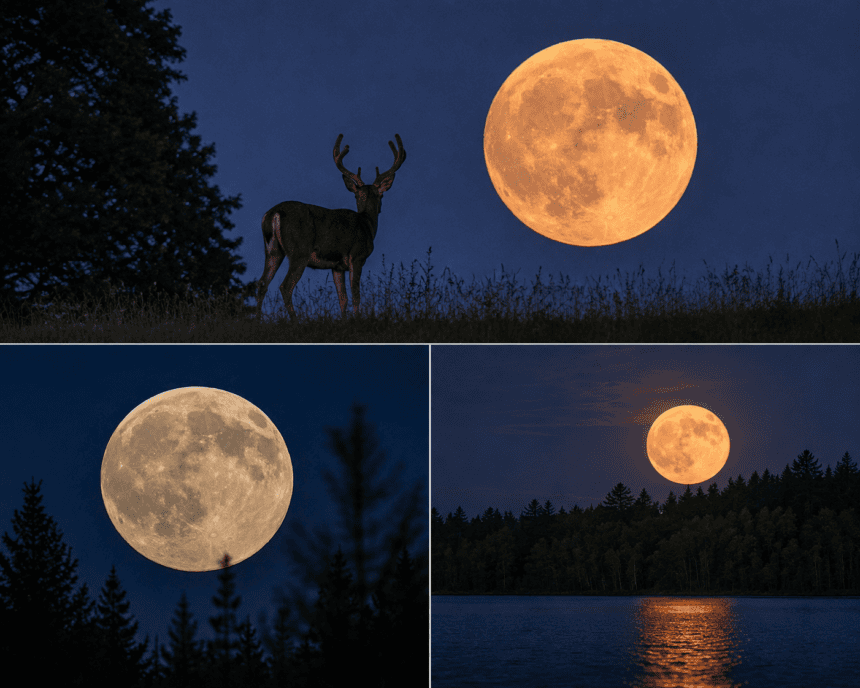
Skywatchers are set to witness the spectacular Buck Moon, one of the year’s most anticipated full moons, as it rises and illuminates the night sky in the coming days.
The Buck Moon is the traditional name given to the full moon that appears in July. The name originates from Native American traditions, as this is the time of year when male deer, known as bucks, begin growing new antlers. Over the centuries, the name has become widely recognized in astronomy and cultural traditions around the world.
Astronomers say the full moon will appear bright and nearly round for several nights, although it reaches its peak illumination at a specific time. Weather permitting, the lunar event will be visible to the naked eye from most parts of the world without the need for telescopes or binoculars.
Experts recommend viewing the Buck Moon shortly after moonrise, when it appears larger and more colorful near the horizon due to an optical phenomenon known as the “Moon Illusion.” As it climbs higher into the sky, it will appear smaller but remain exceptionally bright.
In addition to its visual appeal, the Buck Moon holds cultural and historical significance. Different civilizations have given the July full moon various names based on seasonal changes, agricultural cycles, and wildlife behavior, reflecting humanity’s long-standing connection with the natural world.
Astronomers encourage people to observe the event from locations with minimal light pollution for the best viewing experience. Clear skies and open horizons can enhance visibility and provide excellent opportunities for photography.
The Buck Moon serves as another reminder of the fascinating celestial events that occur throughout the year, offering people a chance to appreciate the beauty of the night sky and learn more about Earth’s natural satellite.