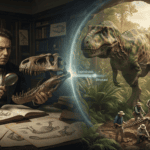
Cetiosaurus was one of the earliest giant long-necked dinosaurs to roam the Earth, living during the Middle Jurassic Period around 168 to 166 million years ago. Fossil discoveries from Britain have helped scientists better understand the early evolution of the enormous sauropod dinosaurs that would later dominate prehistoric landscpes.
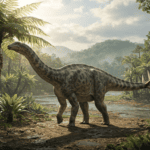
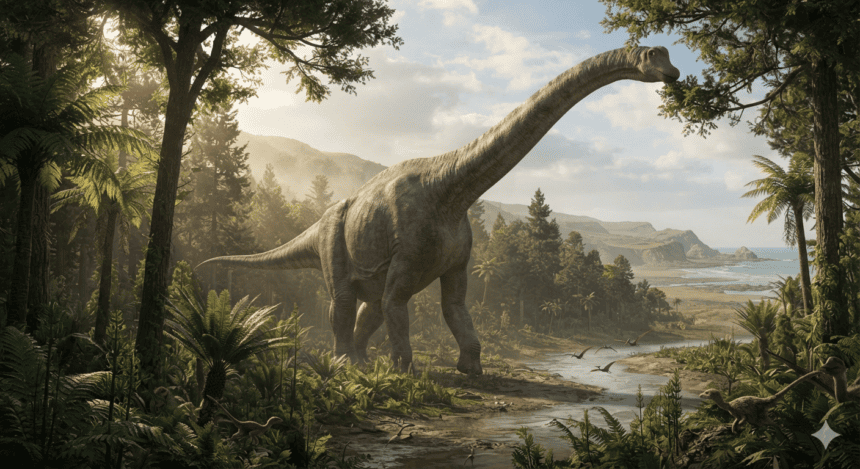
Measuring approximately 15 to 18 meters (49–59 feet) in length, Cetiosaurus was a massive herbivorous sauropod with a long neck, powerful body, sturdy pillar-like legs, and an equally long tail that helped maintain balance. Despite its enormous size, scientists believe it was a peaceful plant-eater that fed on ferns, conifers, and other Jurassic vegetation.
Recent fossil studies using CT scanning, 3D digital reconstruction, and bone microstructure analysis have revealed new details about its growth, movement, and skeletal anatomy. Researchers found that its strong limb bones were specially adapted to support its tremendous weight while allowing it to travel across ancient floodplains and forests.
Unlike many later sauropods, Cetiosaurus retained several primitive skeletal features, making it an important link in understanding how giant dinosaurs evolved. Scientists consider it one of the earliest true sauropods that paved the way for later giants such as Diplodocus and Brachiosaurus.
Experts say the continued study of Cetiosaurus fossils is helping researchers reconstruct Jurassic ecosystems and better understand how some of the largest animals ever to walk the Earth first evolved.