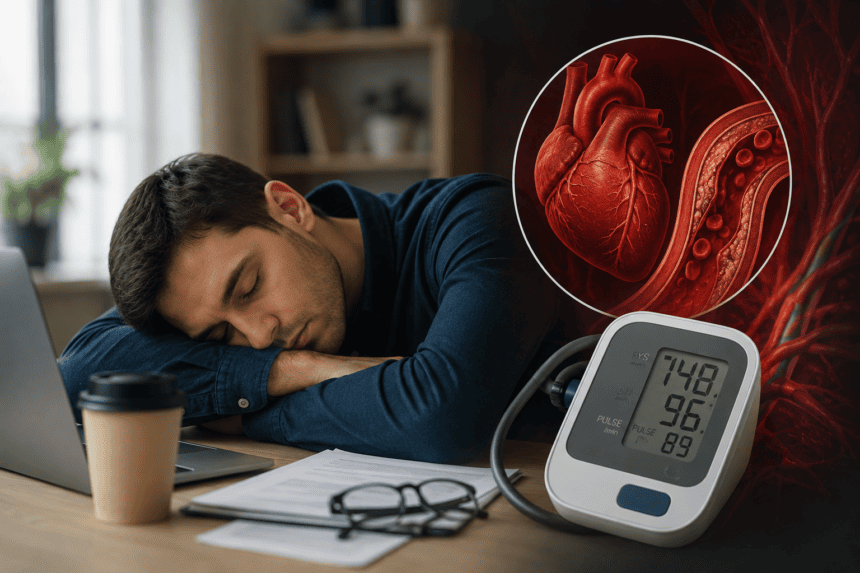
Feeling sleepy during the day can sometimes seem harmless, particularly after a late night or a busy day. However, persistent daytime sleepiness may be more than a sign of tiredness.
Research has suggested a possible relationship between excessive daytime sleepiness and cardiovascular health, including high blood pressure.
What Is Excessive Daytime Sleepiness?
Daytime sleepiness refers to an unusually strong tendency to feel sleepy or fall asleep during normal daytime activities.
A person may struggle to stay awake while working, studying, reading, watching television or travelling as a passenger.
Occasional tiredness is normal. Persistent sleepiness, however, may indicate that nighttime sleep is inadequate or that another underlying issue is affecting sleep quality.
How Could Sleepiness Be Related to Blood Pressure?
Sleep and cardiovascular health are closely connected. During normal sleep, blood pressure generally falls as the body enters a period of rest.
Poor-quality sleep or disrupted sleep may interfere with this process.
Conditions such as obstructive sleep apnea can repeatedly interrupt breathing during sleep. These interruptions can reduce sleep quality and may contribute to elevated blood pressure and other cardiovascular problems.
The Role of Sleep Duration
Both insufficient and poor-quality sleep have been associated with various health concerns.
People who regularly sleep too little may experience changes in hormones, metabolism and stress responses. These changes can affect cardiovascular health.
However, daytime sleepiness alone does not prove that a person has high blood pressure. It can have many causes.
Other Causes of Daytime Sleepiness
Persistent sleepiness may result from:
- Not getting enough sleep
- Irregular sleep schedules
- Sleep apnea
- Certain medications
- Depression or other mental health conditions
- Alcohol use
- Shift work
- Other sleep disorders
For this reason, identifying the underlying cause is more useful than treating sleepiness as an isolated symptom.
When Should You Seek Medical Advice?
If you regularly fall asleep during the day, struggle to remain alert or wake up feeling exhausted despite spending enough time in bed, consider speaking with a healthcare professional.
Medical evaluation may be particularly important if you also experience loud snoring, breathing pauses during sleep, morning headaches or difficulty concentrating.
Checking blood pressure regularly is also important because high blood pressure often produces no obvious symptoms.
Improve Your Sleep Habits
Good sleep habits can support both daytime alertness and overall health.
Try to maintain a consistent bedtime and wake-up time, limit caffeine late in the day, reduce exposure to stimulating screens before bed and keep the bedroom comfortable and quiet.
Regular physical activity can also support sleep quality.
Bottom Line
Persistent daytime sleepiness should not always be dismissed as simple tiredness. Research suggests that sleep problems and cardiovascular health can be connected, while conditions such as sleep apnea may contribute to both daytime sleepiness and high blood pressure.
If excessive sleepiness is frequent or affects daily life, identifying its underlying cause can help protect both sleep and long-term health.