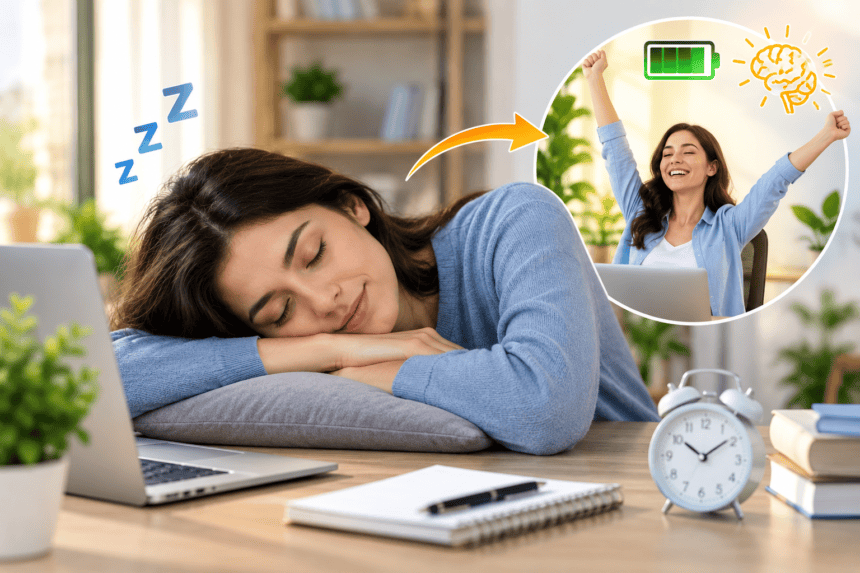
A short nap can be a useful way to restore alertness when you feel tired during the day. Unlike a long afternoon sleep that may leave you feeling groggy, a properly timed power nap is usually brief and designed to help you feel refreshed.
For students, office workers, drivers and people with demanding schedules, a short nap can sometimes provide a temporary boost in alertness.
What Is a Power Nap?
A power nap is generally a short period of daytime sleep, often lasting around 10 to 20 minutes.
The goal is to get some restorative rest without entering deeper stages of sleep that can make waking up more difficult.
A short nap does not replace adequate nighttime sleep, but it can provide temporary relief from daytime tiredness.
Choose the Right Time
Timing matters.
For many people, the best time for a nap is in the early afternoon, when the body’s natural alertness may temporarily decrease.
Napping too late in the afternoon or evening can interfere with nighttime sleep, particularly for people who already struggle with insomnia.
Keep It Short
Setting an alarm can help prevent a short nap from turning into a long sleep.
A nap of around 10–20 minutes may be enough for many people. Longer naps may be appropriate in certain situations, but they can increase the chance of sleep inertia—the groggy feeling that sometimes occurs after waking from deeper sleep.
Create a Comfortable Environment
Find a quiet, comfortable and relatively dark place if possible.
Reducing noise and interruptions can make it easier to fall asleep quickly.
If you are unable to sleep, simply resting quietly for a short period may still feel refreshing.
Set an Alarm
Before closing your eyes, set an alarm for your desired wake-up time.
This is particularly important if you have an important meeting, class or task shortly after the nap.
Give Yourself Time to Wake Up
After waking, give yourself a few minutes before immediately starting demanding activities.
Standing up, drinking some water, getting natural light and moving around gently can help you become more alert.
Who May Benefit From a Power Nap?
A short nap may be useful for people experiencing temporary sleepiness due to:
- A poor night’s sleep
- Long working hours
- Travel
- Shift work
- An unusually demanding schedule
However, frequent dependence on daytime naps may indicate that nighttime sleep is inadequate.
When Napping May Not Be Helpful
If you regularly need long naps despite getting adequate nighttime sleep, consider discussing the issue with a healthcare professional.
Excessive daytime sleepiness can sometimes be associated with sleep disorders or other health conditions.
Bottom Line
A short, well-timed power nap can provide a temporary boost in alertness and energy. Keeping it brief and taking it earlier in the afternoon can reduce the likelihood of nighttime sleep disruption. However, a nap should complement—not replace—regular, sufficient nighttime sleep.