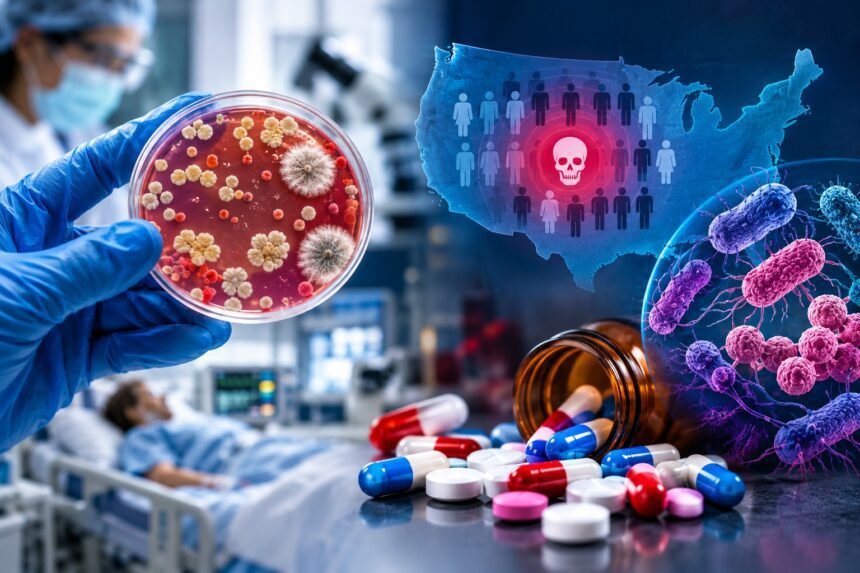
WASHINGTON: Drug-resistant bacteria and fungi are causing an estimated 9.7 million infections and 50,800 deaths annually in the United States, according to a new report from the Centers for Disease Control and Prevention (CDC).
The report, released in October 2026, highlights the growing threat of antimicrobial resistance, a condition in which bacteria and fungi develop the ability to survive medicines designed to kill them. As a result, infections can become harder to treat, leaving doctors with fewer effective treatment options.
The CDC identified 19 bacterial and fungal pathogens that pose different levels of risk to public health. Four were classified as urgent threats, 13 as serious threats and two as concerning threats. The agency is also monitoring six additional pathogens whose full impact is not yet understood.
Among the most concerning threats is *Candida auris*, a fungus that can cause serious infections, particularly among patients in hospitals and nursing homes. Cases have increased significantly in recent years, and some strains are resistant to multiple antifungal medicines.
Other major threats include bacteria resistant to carbapenems, a class of antibiotics often used to treat severe infections, as well as drug-resistant gonorrhoea. The CDC has also classified drug-resistant meningococcal bacteria as a serious threat because they can cause meningitis and bloodstream infections.
Antimicrobial resistance can make routine medical care more dangerous. Patients may experience longer hospital stays, higher treatment costs and an increased risk of life-threatening complications. Infections associated with healthcare settings accounted for more than 42,000 deaths and nearly $12 billion in healthcare costs in 2023, according to the report.
However, the findings also show that prevention efforts can make a difference. The CDC reported progress against *Clostridioides difficile*, commonly known as C. diff, with infection rates falling between 2018 and 2020 and remaining stable afterward. Although C. diff is not typically drug-resistant, it is included in the report because antibiotic use and the spread of germs contribute to its risk.
Health officials recommend using antibiotics and antifungal medicines only when prescribed by a qualified healthcare professional. Antibiotics do not treat viral illnesses such as colds and flu, and unnecessary use can contribute to resistance.
Regular handwashing, keeping wounds clean, staying up to date with recommended vaccinations and following infection-control guidance can also help prevent infections.
The CDC warns that tackling drug resistance will require responsible medicine use, stronger infection prevention and continued monitoring of dangerous pathogens.