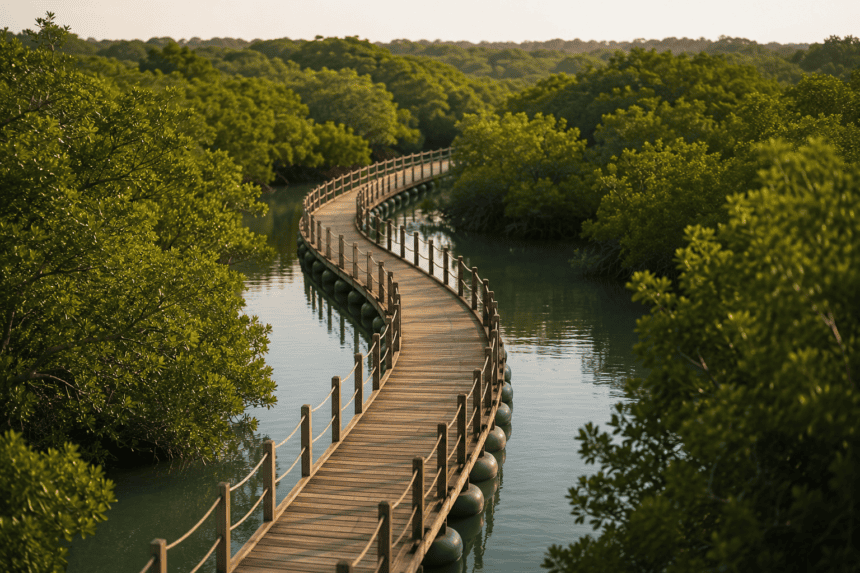
A new floating bridge has opened to the public, carving a path directly into the dense, protected mangrove forests. Stretching over several hundred meters of tidal flats, the structure offers a rare, low-impact perspective on an ecosystem that has remained largely inaccessible to casual visitors.
The bridge isn’t just a walkway. It’s a deliberate shift in how local authorities are managing the intersection of tourism and conservation. By lifting foot traffic off the sensitive mudflats, the government aims to curb the damage caused by traditional trekking, which has long threatened the fragile root systems of the mangroves.
“We’ve seen the damage firsthand,” said a lead conservationist involved in the project. “People want to get close to the trees, but their boots destroy the very thing they come to see. This structure changes the dynamic.”
The construction uses high-density, recycled buoyant modules linked to allow for natural tidal movement. As the water rises and falls, the bridge adjusts, ensuring the structure remains stable while keeping the forest floor undisturbed. It’s a functional piece of engineering that avoids the permanent scars of concrete piers or wooden pilings.
Local tourism boards are already projecting a significant uptick in visitors. However, the environmental oversight committee has set strict limits on daily foot traffic to prevent the site from becoming a victim of its own popularity. Rangers will be stationed at the entry point to monitor crowds and ensure wildlife habitats remain quiet.
Critics argue that even with a bridge, human presence disrupts the nesting patterns of migratory birds. While the design minimizes physical contact with the environment, the noise levels and constant movement of tourists remain variables that biologists are still watching closely.
For now, the bridge is open from dawn until dusk. It provides a rare, silent vantage point into a world of tangled roots and mud-skippers—a place where the city feels miles away, even if it’s just a short drive from the urban center. Whether this experiment in “managed nature” succeeds depends on how well the public respects the boundaries of the forest.