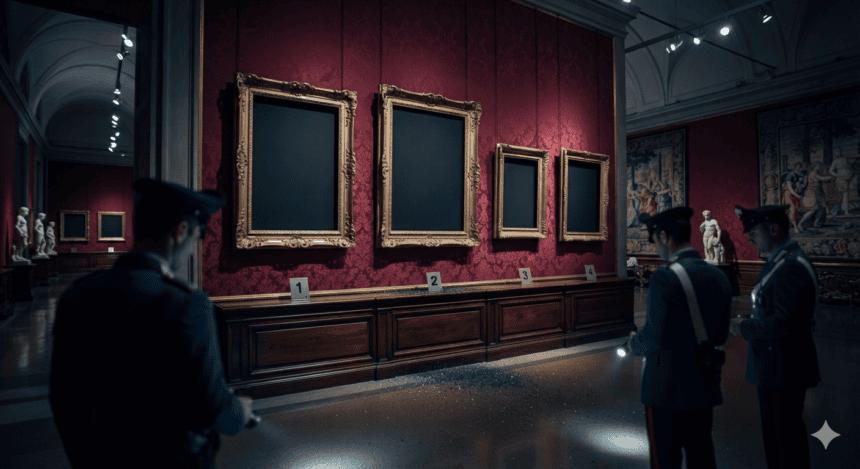
Four paintings from the Italian Renaissance were stolen early Tuesday morning in a precision heist at the Museo Civico in northern Italy. Local police confirmed the thieves bypassed high-security alarms and motion sensors, vanishing before guards could respond to the breach.
The stolen works, including a rare portrait by a student of Leonardo da Vinci, were removed from their frames between 3:00 a.m. and 4:00 a.m. Investigators noted the operation required intimate knowledge of the museum’s layout and security blind spots.
“This wasn’t a smash-and-grab,” said Police Commissioner Marco Rossi. “They knew exactly which paintings to target and the fastest route to the emergency exits. It’s a targeted theft, likely commissioned by a private collector.”
The stolen collection is valued at approximately €12 million. While the museum’s insurance covers the financial loss, art historians warn the cultural damage is irreparable. These specific pieces are notoriously difficult to sell on the open market, leading authorities to suspect the works are already being moved through an illicit private network.
The museum had recently upgraded its surveillance system, but the thieves utilized an electronic jammer to disable the feed for a critical six-minute window. This technical sophistication suggests the involvement of organized crime groups specializing in high-end art theft.
Italy’s Carabinieri Art Squad—the specialized unit dedicated to recovering stolen heritage—has sealed the border and alerted Interpol. They are currently reviewing footage from surrounding streets to track the suspects’ getaway vehicle.
For now, the museum remains closed to the public. As investigators comb the galleries for forensic evidence, the primary concern remains the safety of the canvases, which require specific climate controls to prevent rapid deterioration. If the thieves don’t have the proper storage, the masterpieces could suffer irreversible damage within days.