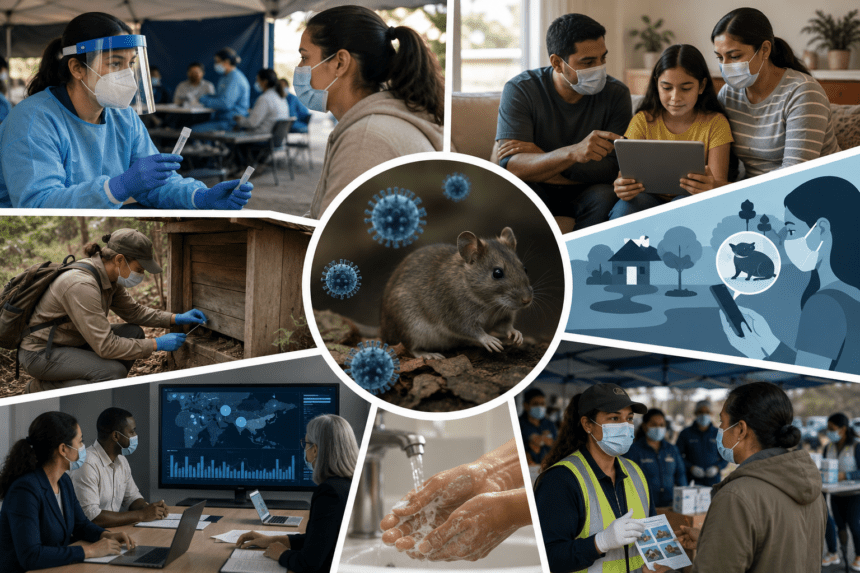
Public health officials are scrambling to contain a localized Hantavirus outbreak, but the real test isn’t just the virus it’s the public’s eroding trust in official health guidance. Years of polarized messaging during the Covid-19 pandemic have left a mark. As cases emerge, residents in affected regions are questioning the severity of warnings rather than taking the standard precautions.
Health departments find themselves fighting two battles: the biological spread of a rodent-borne pathogen and a deep-seated skepticism toward government-issued health protocols. “We aren’t just dealing with a virus that hides in dust and droppings,” said Dr. Elena Rossi, an infectious disease specialist monitoring the cluster.
“We’re dealing with a communication environment where every advisory is met with a ‘why now?’ or a ‘what are they hiding?
‘” The Hantavirus Pulmonary Syndrome (HPS) is rare but lethal. It doesn’t spread person-to-person, yet the urgency required to avoid aerosolized rodent waste is often lost in the noise of modern digital discourse. When officials issue instructions to seal homes or wear N95 masks while cleaning sheds, the advice hits a wall of pandemic-era fatigue.
Data from local health clinics shows a 30% drop in compliance with environmental safety guidelines compared to pre-2020 outbreaks. People aren’t necessarily ignoring the danger; they are filtering it through a lens of exhaustion.
The “playbook” used to manage the public during the last four years heavy on mandates and light on nuance—is failing to gain traction here. Critics argue that the failure lies in the delivery. Instead of top-down directives, experts suggest that local community leaders and primary care physicians are the only ones capable of cutting through the skepticism.
When the state speaks, people tune out. When a local doctor explains the specific risk in a backyard, the dynamic shifts. “The old way of just issuing a press release and expecting the public to fall in line is dead,” says policy analyst Marcus Thorne.
“If you don’t acknowledge the friction caused by the last few years, you’re just shouting into a void.” As cases continue to trickle in, the outcome of this outbreak may serve as a blueprint or a warning for how future health crises are managed. The virus will eventually recede, but the challenge of rebuilding a functional relationship between public health authorities and the citizens they serve remains.