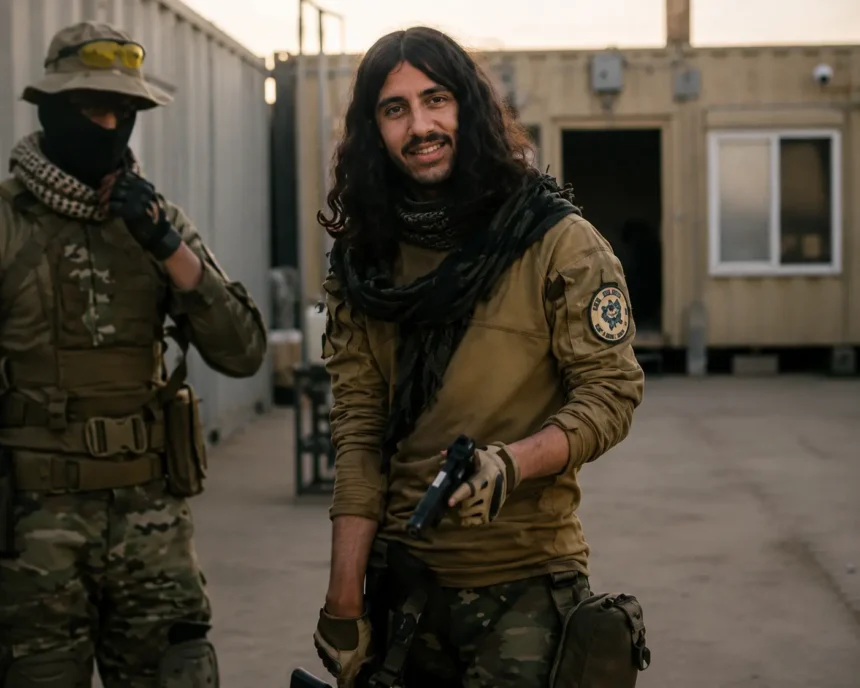
A militant killed in a recent operation in Bannu has been identified by Pakistani security sources as a former member of Afghanistan’s special forces, a claim that, if sustained, is likely to deepen already fraught tensions between Islamabad and Kabul. According to those sources, the slain man was Fatehullah alias Mudassir, whom they described as an active member of the Afghan Taliban administration’s Yarmook 60 Special Forces Battalion, a unit said to operate under Afghanistan’s Interior Ministry.
The identification was reported as part of a wider account of Pakistan’s security concerns about cross-border militancy and the alleged presence of Afghan nationals in attacks inside Pakistan. The same account said Fatehullah was a resident of Zarmat district in Paktia province and had allegedly worked alongside members of the banned Tehreek-i-Taliban Pakistan (TTP) in operations targeting Pakistani forces.
What makes the claim especially sensitive is not just the nationality of the slain militant, but the suggestion that he had formal training and links to an Afghan state structure. Pakistani officials have for months argued that militants operating against Pakistan are finding space, shelter or support across the border. Kabul has repeatedly denied those accusations. In that context, this latest claim is likely to be read in Islamabad as more evidence for Pakistan’s long-running case, while in Kabul it will almost certainly be disputed or rejected.
There is, though, an important distinction to keep in view. So far, the specific identification of Fatehullah as an Afghan special forces member appears to rest on Pakistani security-source reporting, not on a detailed public statement from Afghanistan or an independently released evidentiary dossier. That doesn’t make the claim irrelevant. It does mean the attribution matters, and it should be treated as such.
Bannu has remained one of the pressure points in Pakistan’s deteriorating security landscape. Earlier this year, a suicide bombing in the district killed two Pakistani soldiers, including Lieutenant Colonel Gul Faraz, in an attack the military linked to militants operating in the northwest near the Afghan border. Separate Pakistani military statements and media reports have also described other operations in Bannu in which wanted militant commanders were killed.
That broader pattern matters because the Bannu case is not landing in isolation. Pakistan has repeatedly said militants linked to the TTP are using Afghan soil as a base for planning and launching attacks. International and regional reporting has noted the same dispute, even as Afghanistan’s Taliban government continues to deny providing sanctuary to anti-Pakistan fighters.
If Pakistan’s identification is backed up publicly in the coming days, the fallout could be significant. It would raise uncomfortable questions about whether individuals with official or semi-official military backgrounds in Afghanistan are crossing into anti-Pakistan militancy, or whether such affiliations are being invoked mainly to underscore Islamabad’s case against Kabul. Right now, the public evidence available in reporting points firmly to a Pakistani security claim, but not yet to a fully documented cross-border prosecution of that claim.
For Pakistan, even that is enough to sharpen the message. The state has been trying to show that militancy in the northwest is not only a domestic insurgency problem, but part of a larger regional security challenge with external links. The death of a man Pakistani sources describe as both a high-profile militant and an Afghan special forces member fits neatly into that narrative — and ensures the Bannu operation will carry political weight well beyond the battlefield.