Monkeypox is a viral disease that spreads mainly through close contact with an infected person, contaminated surfaces, or body fluids. Although it is not highly contagious like some other infections, following basic preventive measures can greatly reduce the risk of infection.
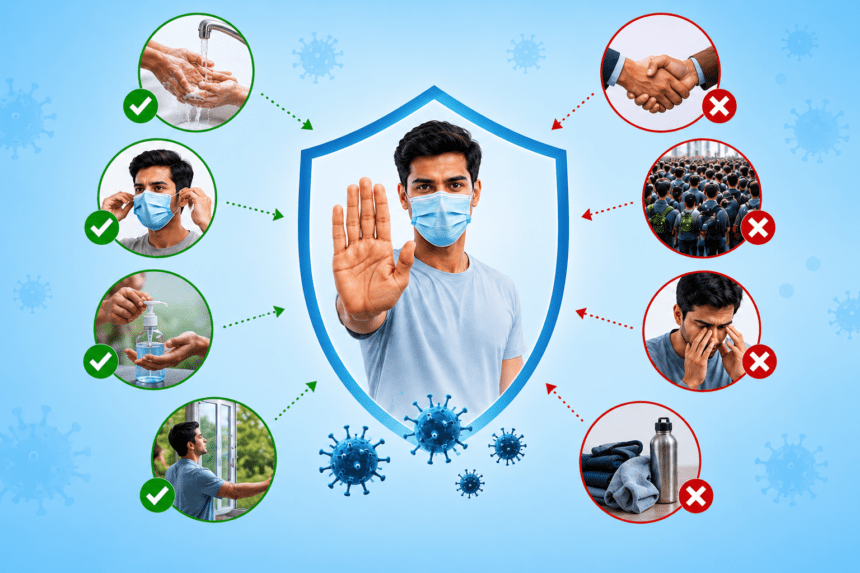
1. Maintain Proper Hygiene
Good hygiene is one of the most effective ways to prevent infection.
- Wash hands frequently with soap and water
- Use hand sanitizer when washing is not possible
- Avoid touching your face, eyes, and mouth with unclean hands
2. Avoid Close Contact
Monkeypox spreads through direct physical contact.
- Stay away from people showing symptoms such as rash or fever
- Avoid skin-to-skin contact with suspected cases
- Be cautious in crowded places where close contact is likely
3. Do Not Share Personal Items
Sharing personal belongings increases the risk of spreading infection.
- Do not share towels, clothes, or bedding
- Keep personal items separate and clean
- Disinfect frequently used objects regularly
4. Take Basic Protective Measures
Simple precautions can help reduce exposure.
- Wear a mask in crowded or high-risk areas
- Maintain distance from sick individuals
- Use gloves if handling potentially contaminated materials
5. Identify Symptoms Early
Early detection is important for control and treatment. Common symptoms include:
- Fever
- Skin rash or blisters
- Body aches and weakness
- Swollen lymph nodes
If any symptoms appear, medical advice should be taken immediately.
6. Seek Medical Help
Self-treatment should be avoided. If monkeypox is suspected, consult a healthcare professional for proper diagnosis and treatment.
Conclusion
Monkeypox can be prevented through awareness and simple safety measures. Maintaining hygiene, avoiding close contact, and not sharing personal items are key steps to protect yourself and others from infection.