ISLAMABAD: Indus river system cutting across Pakistan, India and China is both a life source and a rival in South Asia. In spite of borders and politics, this common water network connects the nations of the region and supports millions of people and centuries old civilisations.
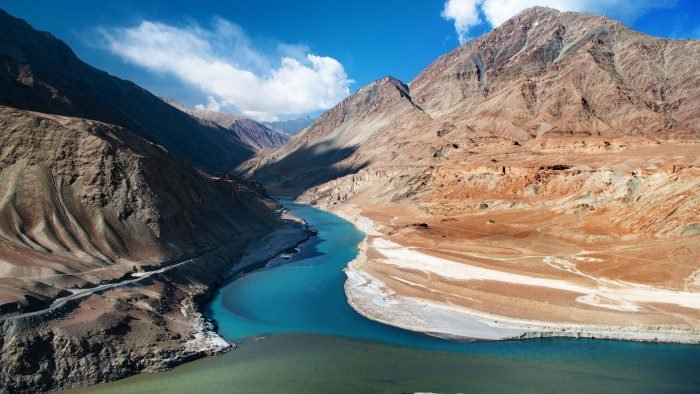
The Indus runs along the Tibet Lake Manasarovar, along the Himalayas and into Indian Illegally Occupied Jammu and Kashmir (IIOJK), before crossing into Gilgit-Baltistan. It flows through Skardu to Bisham, and enters Khyber-Pakhtunkhwa where its power is tapped by the Tarbela Dam. Downstream, the Kabul River joins the Indus and flows south through Kalabagh, Chashma and Taunsa ending at Mithankot.
It is at Mithankot that the Indus and five of its most important tributaries all in all five tributaries- the Sutlej, Beas, Ravi, Jhelum, and Chenab- join together in the Panjnad. This river system is among the most powerful in the world as this short yet very mighty stretch joins back the Indus. The river passes then through the Guddu barrage, Sukkur barrage and Kotri barrage and ends its 3,180-kilometre path in the Arabian Sea.
The territories of Punjab, literally the land of five rivers got their names and fertility due to these waterways. The geography, but also the culture, agriculture, and history of the region are influenced by the Chenab, Jhelum, Ravi, Sutlej and Beas. Still, the tense politics of the region can be traced in these rivers as well. The Beas is not bound by the India but Beas and Sutlej enter Pakistan and the Jhelum and Chenaba enter Azad Kashmir and become part of the Indus.
They combine to give Pakistan a lifeline- irrigating the crops, producing electricity and preserving the delta. This complicated web is what the Indus Waters Treaty of 1960 was designed around so as to divide and control resources available between India and Pakistan.
To Pakistan, survival is the Indus. To India and China, as well, these rivers are life lines. But in the wars and alliances the Indus basin is a message that nature is oblivious to manmade boundaries. These rivers have drawn this area together thousands of years reminding nations of their inter-related fate.
Indus Basin a Lifeline that Binds, Waters that divide.