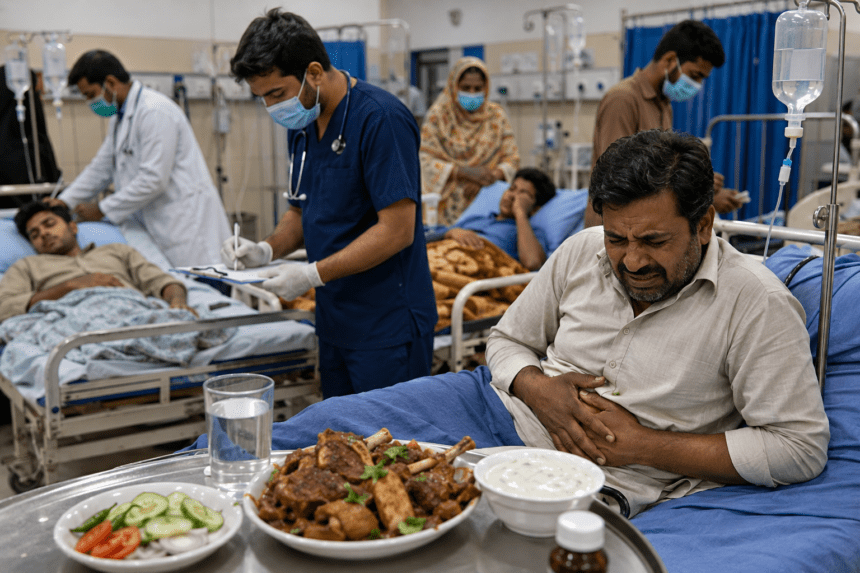
Hospitals across Karachi have reported a noticeable increase in patients suffering from stomach-related illnesses during the Eid ul Adha holidays, with health experts attributing the rise to excessive meat consumption, unhealthy eating habits, and poor food-handling practices.
According to hospital officials, emergency departments in both public and private healthcare facilities experienced a higher-than-usual influx of patients complaining of abdominal pain, indigestion, diarrhea, vomiting, bloating, acidity, and food poisoning. Children, elderly individuals, and people with pre-existing digestive conditions were among the most affected groups.
Medical experts say that the traditional increase in red meat consumption during Eid, combined with rich, fatty, and heavily spiced meals, can place significant strain on the digestive system. They also warn that improper storage and handling of meat, particularly in hot weather, can encourage bacterial growth and increase the risk of foodborne illnesses.
Doctors have urged residents to consume meat in moderation, stay hydrated, and maintain a balanced diet by including fruits and vegetables in their meals. They also emphasized the importance of proper food hygiene, including safe meat storage and thorough cooking practices.
Health professionals advised the public to seek medical attention if they experience severe abdominal pain, persistent vomiting, dehydration, high fever, or bloody diarrhea, as these symptoms may indicate a more serious condition requiring prompt treatment.
Experts stress that maintaining healthy dietary habits beyond the holiday period can help prevent digestive complications and reduce the burden on healthcare facilities. They note that simple preventive measures can significantly lower the risk of stomach illnesses during festive celebrations.