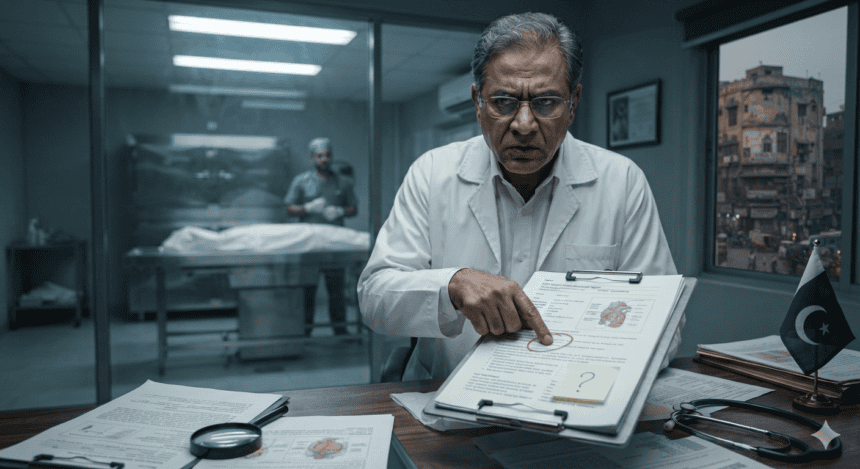
The post-mortem report of Mir Raza, a young man who died in police custody earlier this month, has hit a wall. Karachi’s Police Surgeon, Dr. Summaiya Syed, has formally raised objections over the findings, casting doubt on the transparency of the initial medical examination.
The case, which sparked immediate outrage across the city, centered on allegations that Raza died due to physical abuse while in the custody of the Karachi police. While the initial medical findings suggested natural causes, the Police Surgeon’s intervention suggests the document may not reflect the full picture.
Dr. Syed has questioned the methodology used during the autopsy, specifically citing the omission of key physical markings that families and activists claim were visible on Raza’s body. By flagging these discrepancies, the surgeon has effectively sidelined the initial report, demanding a more rigorous review of the evidence.
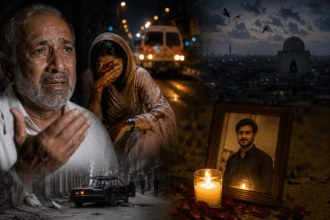
For the family, this is the first shred of institutional validation they have received since Raza’s death. They have maintained from day one that the custodial death was a result of brutality, not a health crisis. The police, meanwhile, have remained largely silent, providing only brief, boilerplate statements claiming they are “cooperating with the investigation.”
The legal implications are mounting. If the initial report is proven to be compromised, it opens the door for a criminal inquiry into the medical team that conducted it, alongside the officers involved in the arrest. Investigators are now under pressure to appoint a secondary medical board to resolve the conflict between the initial findings and the surgeon’s objections.
Raza’s death isn’t an isolated incident in Karachi’s recent history of custodial complaints. It has become a flashpoint for rights groups who argue that the city’s police stations operate with a level of impunity that extends even to the documentation of deaths.
As the investigation enters this new phase, the focus shifts to the upcoming medical board review. If the new findings contradict the first, the case will likely move from a routine inquiry to a full-blown homicide investigation. For now, the police surgeon’s objections have ensured that the official narrative of “natural death” is no longer the final word.