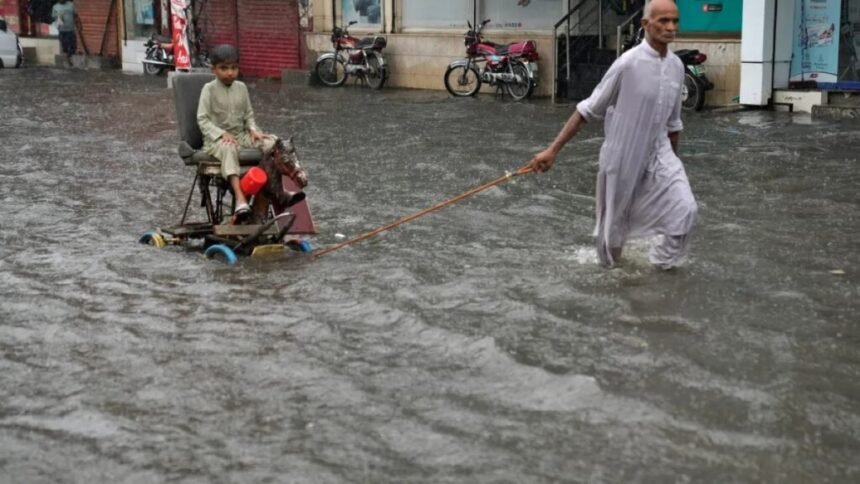
KARACHI: Torrential monsoon rains wreaked havoc across Karachi for the second consecutive day, raising the death toll from rain-related incidents to 17 by Wednesday. The city faced severe urban flooding, prolonged power outages, and transport disruptions as heavy downpours submerged major neighborhoods.
According to the Pakistan Meteorological Department (PMD), several areas, including Gulshan-e-Hadeed and University Road, recorded more than 170 millimeters of rain within 24 hours. Overflowing drains and inundated roads left vehicles stranded, with key arteries such as Karsaz and Malir Halt still waterlogged. Areas like the Old City, Aram Bagh, and the Sindh High Court premises also remained under water despite round-the-clock drainage efforts.
The rains claimed multiple lives, including children and a woman. In one tragic case, a 70-year-old disabled man was found dead in his home after falling into accumulated rainwater.
The electricity crisis deepened as over 550 power feeders tripped across the city. While K-Electric restored nearly 2,000 feeders, more than 240 remained out of service, leaving areas such as Gulistan-e-Jauhar, Korangi, and DHA without power for over 24 hours.
The downpour also disrupted flight operations at Jinnah International Airport, where domestic flights were cancelled due to staff shortages, and international flights faced delays. The Sindh High Court ordered the closure of all courts in Karachi, including subordinate courts, citing worsening conditions.
The PMD warned that strong monsoon currents from the Arabian Sea and Bay of Bengal continue to affect southern Pakistan, predicting more heavy rainfall in the coming days.
Mayor Murtaza Wahab admitted that Karachi’s outdated drainage system is only capable of handling 40mm of rain, far below the volume received this week. He stressed the urgent need for long-term infrastructural reforms to protect the city from future monsoon disasters.