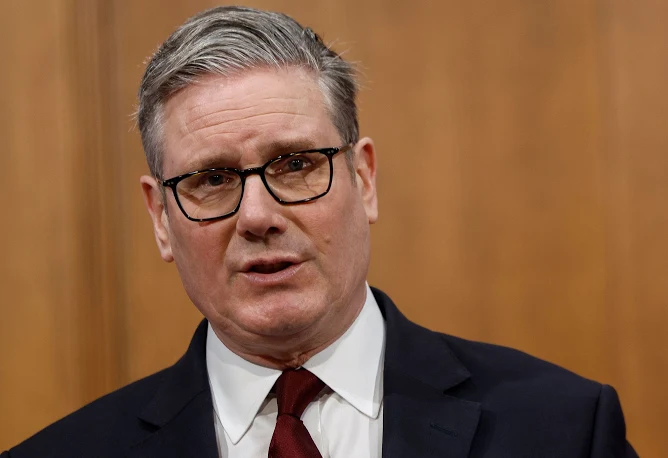
Keir Starmer has rejected calls to quit after Labour’s brutal losses in the May 2026 local and devolved elections, insisting he will stay on as prime minister and warning that walking away now would throw Britain back into instability. In remarks carried by multiple outlets on May 8 and May 10, Starmer said he was “not going to walk away and plunge the country into chaos,” even as pressure inside Labour kept rising.
The pressure is real. Labour’s setbacks were not confined to one bad patch or one awkward council result. Across England, the party lost heavily while Reform UK surged, and the wider set of elections in Scotland and Wales deepened the sense that something had gone badly wrong for Starmer’s government. Sky News’ running results page showed Labour down 1,496 council seats in England, with Reform UK up 1,452, a collapse severe enough to turn an already ugly night into a full-blown leadership crisis.
Inside Labour, the mood has turned from grumbling to open revolt. AP reported that dozens of Labour lawmakers were calling for Starmer’s resignation, while the Guardian said around 40 MPs had urged him either to go now or set out a timetable for leaving. Catherine West, one of Starmer’s own MPs, publicly threatened to trigger a leadership contest if the cabinet failed to move against him.
That is why Starmer’s refusal to resign matters politically, not just symbolically. He is trying to frame himself as the grown-up in the room, the one steady figure after years in which British politics burned through leaders and slogans at a ridiculous pace. It’s a familiar defense, but right now it’s also a risky one. Voters who deserted Labour do not appear especially moved by appeals to stability, and many in his party seem to think steadiness without a compelling direction is just drift with better tailoring. That reading is an inference from the election results and the backlash now spilling into public view.
Starmer has tried to show he is still in command. According to the Guardian, he brought in former prime minister Gordon Brown and senior Labour figure Harriet Harman to advise as he looked for a reset. Supporters argue that dumping a prime minister after one dreadful electoral cycle would look panicked and self-destructive. Critics answer that the panic is already here.
There is another problem for Labour: no clean succession path. Angela Rayner has warned the party must change direction, while Wes Streeting is reportedly being discussed as a possible contender if Starmer’s position collapses further. Andy Burnham’s name is also circulating, though the obvious obstacle remains that he is not currently in Parliament. So even among those who want Starmer gone, there is no single agreed replacement waiting in the wings.
For now, Starmer is betting that defiance looks stronger than surrender. He is saying, in effect, that the losses were terrible, he accepts responsibility, but he still believes he can turn things around. Whether Labour MPs keep tolerating that argument is the question hanging over Westminster tonight. The election damage is measurable. The rebellion is public. And Starmer, at least for the moment, is digging in