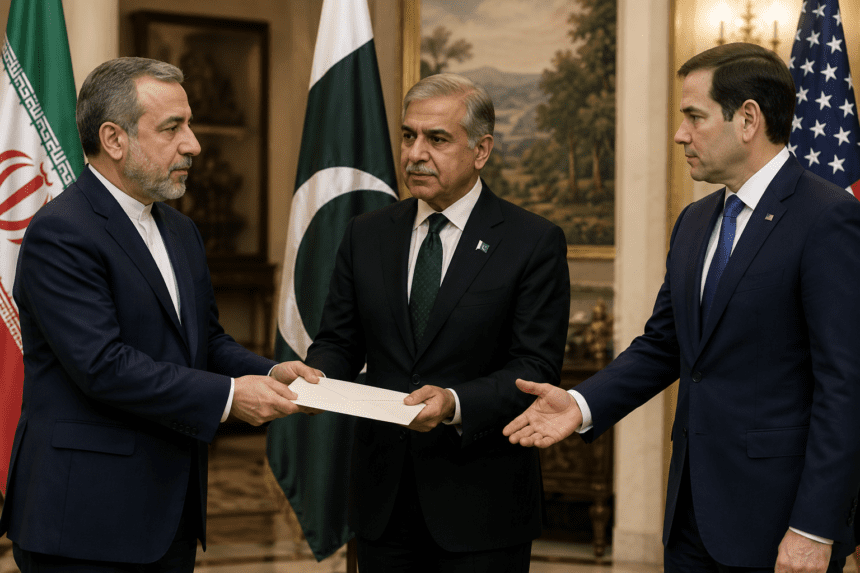
Iran has formally conveyed its response to the latest United States proposal for a regional ceasefire, utilizing Pakistan as a diplomatic conduit. The development, confirmed by officials in Islamabad, marks a shift in how Washington and Tehran are navigating the current volatility across the Middle East.
The proposal, which aims to de-escalate tensions and secure a pause in hostilities, reached Iranian leadership via the Pakistani foreign office. By leveraging Islamabad’s long-standing, if complex, ties with both capitals, the Biden administration is attempting to bridge a communication gap that has widened significantly over the past year.
The response from Tehran remains under review by officials in Washington. While the contents of the document are tightly held, sources familiar with the exchange suggest the Iranian position centers on a demand for specific security guarantees and a clear path toward the lifting of sanctions. For the White House, the stakes are immediate.
With regional proxies and state actors teetering on the edge of a wider conflict, the administration is under pressure to show that its back-channel diplomacy can produce tangible results. Whether this latest exchange represents a genuine opening for negotiation or another tactical delay remains the central question for regional analysts. Pakistan’s involvement is not incidental.
As a country maintaining active diplomatic channels with both the U.S. and Iran, Islamabad has positioned itself as a necessary broker.
However, the role comes with its own risks; being the messenger in a high-stakes standoff leaves little room for error.
“The message has been passed, and we are now waiting to see if there is a willingness to engage on these terms,” a diplomatic source said, speaking on condition of anonymity due to the sensitivity of the ongoing talks. The window for a diplomatic breakthrough is narrowing.
As regional military movements continue, the reliance on third-party channels highlights the profound lack of trust between the two primary antagonists. If this latest response fails to move the needle, the prospect of direct, sustained de-escalation may be off the table for the foreseeable future.