The Directorate of Malaria Control Pakistan has announced a significant development in the fight against malaria, releasing the results of the country’s first G6PD pilot project. The project, conducted in collaboration with the global organization Medicines for Malaria Venture (MMV), was successfully implemented in nine malaria-affected districts across Pakistan.
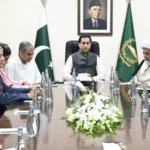
According to a spokesperson from the Ministry of Health, a special event was held to mark this milestone. The event was attended by representatives from the World Health Organization (WHO), UNICEF, the Global Fund, MMV, and other national and international institutions. During the event, Director of the National Malaria Control Program, Dr. Mukhtar, provided a detailed briefing and said the pilot focused on the practical implementation of G6PD testing.
Minister of State for Health, Dr. Mukhtar Bharath, highlighted that the pilot results clearly demonstrated the feasibility of integrating G6PD testing into the primary healthcare system. He noted that the significance of this initiative increased following the 2022 floods, which saw over 2.8 million malaria cases reported. “We are aligning the outcomes of this pilot with our national malaria strategy,” he added.
Dr. Bharath explained that the aim of the project was to introduce the new anti-malarial drug Tafenoquine in Pakistan. This drug has been shown to be more effective in ensuring patient compliance compared to the older 14-day regimen Primaquine. Following its approval by WHO in September last year, Pakistan’s Drug Regulatory Authority (DRAP) has now officially registered Tafenoquine.
He further stated that previously, patients using Primaquine would often discontinue the medication after just two or three days, leading to incomplete recovery. This challenge of patients not completing their treatment remains a global concern. However, the introduction of Tafenoquine, which requires a shorter treatment period, is expected to significantly improve treatment adherence.
Dr. Bharath expressed optimism, saying that the use of Tafenoquine marks a major step forward in Pakistan’s efforts to eliminate malaria. “We are among the few countries pioneering this research and implementation, and we are moving towards becoming malaria-free,” he said.
He also announced that Pakistan is set to host the International Conference on Malaria Elimination in 2026. The conference will invite scientists, experts, and delegates from around the world, and Pakistan will showcase its progress and global-standard efforts in malaria control and elimination.