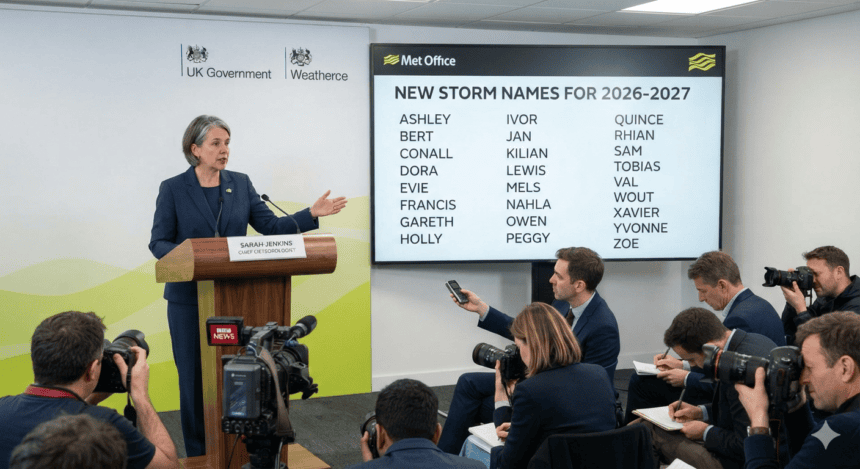
The Met Office has unveiled the storm names for the 2026-2027 season, continuing a collaborative naming tradition that aims to improve public safety and awareness during extreme weather events.
The list, finalized in partnership with Met Éireann in Ireland and KNMI in the Netherlands, features a mix of names reflecting the diverse cultures of the three nations. Officials confirmed the new roster will take effect starting September 1, 2026, replacing the current list as the primary tool for identifying high-impact wind and rain systems.
Naming storms helps emergency services and the public prepare for severe weather. When a system is expected to cause “medium” or “high” impacts, it is officially named, triggering a series of warnings that cut through the noise of standard weather forecasts.
“We want people to take these warnings seriously,” said a senior meteorologist at the Met Office. “A name attached to a storm creates a clear focal point for the public to track the threat level and take necessary precautions before the worst of the weather arrives.”
The 2026-2027 list includes:
* A: Arwen
* B: Bairbre
* C: Ciara
* D: Darragh
* E: Ewan
* F: Flora
* G: Gorm
* H: Hugo
* I: Ilsa
* J: Jelle
(And so on through the alphabet, excluding Q, U, X, Y, and Z, in line with international standards).
Meteorologists have noted that the 2026-2027 cycle will be closely monitored for shifts in intensity. Climate data suggests that the North Atlantic is experiencing more frequent rapid-intensification events, where storms strengthen significantly over shorter windows of time.
The strategy of “name-and-shame” has proven effective since its inception in 2015. Public engagement with weather warnings spikes when a system is named, according to internal Met Office reports. Officials hope this new list will maintain that momentum, ensuring residents from Cornwall to County Cork remain vigilant as the climate landscape continues to shift.
The next season will be the twelfth year of the tripartite naming project. By keeping the names predictable and easy to remember, the Met Office aims to reduce confusion when multiple low-pressure systems track across the Atlantic in quick succession.
With the list now public, the focus shifts to the upcoming autumn season, where the first name on the list will be ready for deployment the moment a significant weather threat emerges.