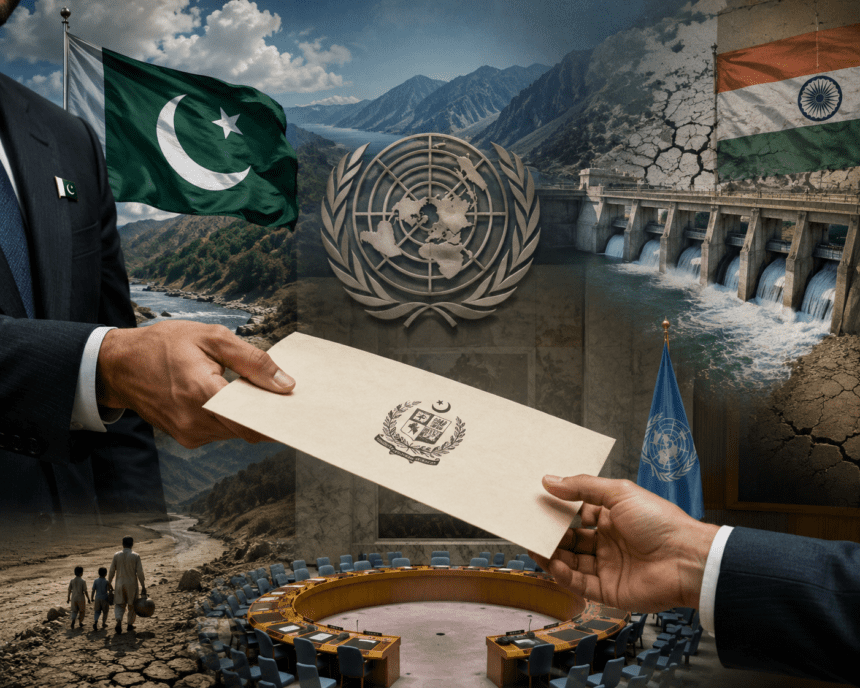
Pakistan has officially moved its dispute with India over the Indus Waters Treaty to the United Nations, submitting a formal letter to the Security Council detailing what Islamabad describes as persistent violations of the 1960 water-sharing agreement.
The move marks a shift in Pakistan’s strategy. For years, the two neighbors relied on the Permanent Indus Commission to settle technical grievances. Now, Islamabad is signaling that bilateral mechanisms have reached a breaking point, specifically citing India’s construction of hydropower projects on the Kishanganga and Ratle rivers.
Pakistan’s permanent representative to the UN delivered the correspondence, urging the international community to take notice of what it calls “unilateral actions.” The core of the complaint remains the design of these dams, which Pakistan insists restricts water flow into the Chenab and Jhelum rivers, threatening its agrarian economy.
India has long maintained that its projects are fully compliant with the treaty’s technical specifications. New Delhi’s position has remained consistent: it views these developments as legitimate infrastructure projects intended to harness the hydroelectric potential of the region, insisting that the designs do not violate the letter or spirit of the agreement brokered by the World Bank decades ago.
The treaty, often cited as one of the most successful water-sharing arrangements globally, has survived three wars and multiple border skirmishes. It grants India control over the eastern rivers—the Ravi, Beas, and Sutlej—while giving Pakistan rights to the western rivers—the Indus, Jhelum, and Chenab. The current impasse stems from disagreements over whether run-of-the-river projects in Indian-administered Kashmir infringe on those western water rights.
This diplomatic escalation comes as both nations navigate a period of frosty relations, with formal dialogue between the two capitals largely frozen. By bringing the matter to the Security Council, Pakistan is attempting to internationalize a dispute that India prefers to keep strictly bilateral.
Whether the UN can—or will—intervene remains uncertain. The Security Council has historically been reluctant to weigh in on technical water-sharing disputes, typically deferring to the World Bank or neutral experts as outlined in the treaty’s own dispute-resolution clauses.
For now, the letter serves as a loud signal that the status quo is no longer tenable for Islamabad. As the region faces increasing climate volatility and shifting water availability, the struggle over the Indus basin is moving from quiet technical boardrooms to the world’s most prominent diplomatic stage.