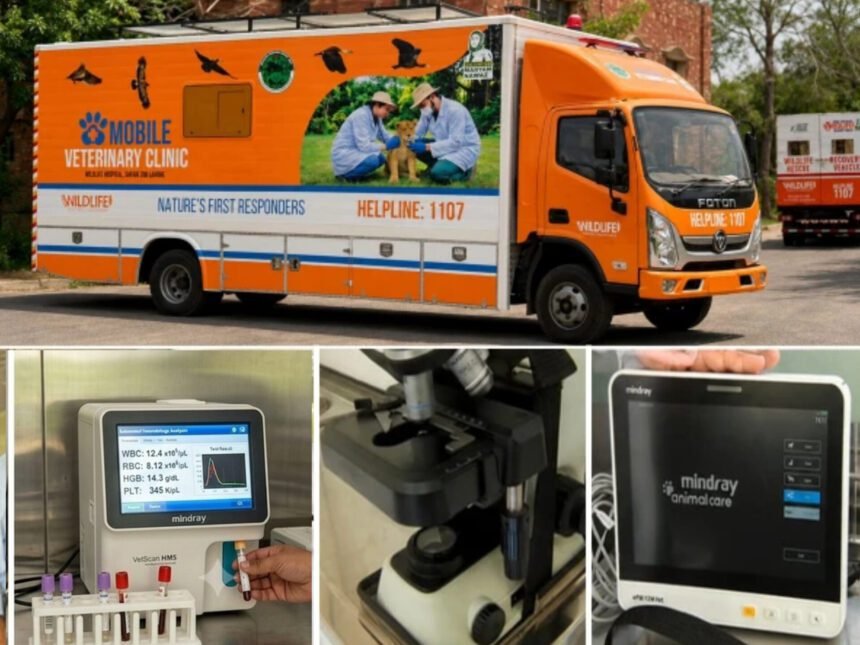
The Punjab Government has developed Pakistan’s first Mobile Wildlife Clinic for the treatment and rescue of wild animals, aimed at providing medical facilities to injured and sick wild animals at their current locations.
The modern mobile clinic, stationed at Lahore Safari Zoo, is equipped with portable X-ray equipment, Doppler ultrasound, ECG, vital monitors, an oxygen concentrator, laboratory facilities, and advanced instruments required for minor surgical procedures.
The clinic will also be able to conduct preliminary tests of animal blood and other samples on site.
Director Veterinary Services Dr. Rizwan Khan stated that it is not always possible to transport wild animals to hospitals for treatment, as they often experience severe stress during transportation.
Keeping this need in view, the mobile clinic has been developed so that examination, diagnosis, and initial treatment of animals can be carried out on site.
He said that most of the medical equipment available in the clinic is portable and rechargeable, enabling its use in remote areas, deserts, and mountainous regions. A solar system and generator have also been installed in the vehicle to ensure power supply.
According to Dr. Rizwan Khan, the mobile clinic is also equipped with a modern dart gun, through which wild animals can be medicated or sedated from a safe distance when required.
In addition, portable X-ray and ultrasound machines will enable the immediate diagnosis of animals.
He stated that this is the first mobile wildlife clinic of its kind in Pakistan and it will be used in zoos, safari parks, wildlife centers, and rescue operations across Punjab.
He further said that a modern Wildlife Rescue Center and a state of the art Wildlife Hospital have also been established alongside the mobile clinic, where injured or sick animals are being transferred for advanced medical care and surgical services. Several animals have already undergone successful treatment and operations at the hospital.
Officials of the Wildlife Department said that the project will significantly improve the timely diagnosis and treatment of injured, sick, and rescued animals, while also helping to reduce animal mortality.