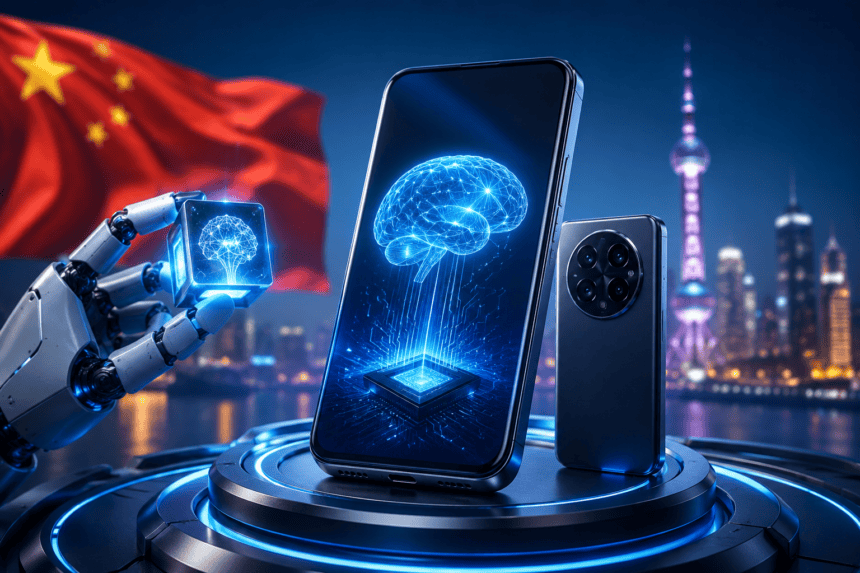
The race to cram desktop-grade artificial intelligence into a handheld device hit a new gear this week in China. At the Mobile World Congress in Shanghai, major manufacturers shifted the narrative from raw camera specs and screen refresh rates to something more abstract: local, on-device intelligence.
Xiaomi, Honor, and Vivo spent the week showcasing phones that no longer rely on cloud connections to parse complex queries. By shrinking large language models to run natively on Snapdragon 8 Gen 3 and Dimensity 9300+ chipsets, these devices are turning into personal assistants that don’t stutter when the Wi-Fi drops.
For the average consumer, this translates to real-world utility. Honor’s latest flagship features a “Magic Portal” that predicts user intent, pulling address data from a text message and dropping it directly into a navigation app. Vivo’s integration goes deeper, allowing users to summarize lengthy documents or generate images while the phone is in airplane mode.
The shift is a strategic pivot. Cloud-based AI is expensive to maintain and fraught with latency issues. By moving the processing power to the silicon inside the handset, these companies are solving two problems: user privacy and response speed.
“We aren’t just adding features; we are changing how the hardware interacts with the user’s intent,” said a lead engineer at one of the exhibiting firms, who requested anonymity to speak candidly about upcoming software roadmaps. “The cloud is now the backup, not the engine.”
There is a catch. Running high-end AI locally creates a massive thermal load on a chassis that’s less than 9mm thick. During live demonstrations in Shanghai, several handsets grew noticeably warm after just ten minutes of heavy image generation. Battery life remains the unspoken elephant in the room; powering a neural processing unit (NPU) at peak capacity drains cells faster than traditional gaming or video streaming.
Market analysts at the event pointed to the “AI phone” label as a desperate attempt to jumpstart a stagnant market. Global smartphone shipments have plateaued, and manufacturers need a reason for users to upgrade hardware that has felt “good enough” for the last three years.
Whether these AI features are a genuine leap or just a software layer over existing tech remains the central debate. For now, the hardware is ready. The question is whether the software can stay cool enough to make the upgrade worth the price tag.