Islamabad: Pakistan’s Power Division has warned electricity consumers not to trust fake subsidy links or unofficial QR-code messages circulating online, saying fraudsters are trying to steal personal information by impersonating a government electricity subsidy process. The advisory was issued on Friday, May 22, 2026, as reports of phishing-style scams began surfacing around the newly introduced verification system for subsidised consumers.
According to reports quoting the Power Division spokesperson, scammers are asking users to click suspicious links, enter personal details through a multi-step process, and then submit a six-digit verification code. That, officials say, is the trap. The ministry’s message is blunt: consumers should not share their data on unverified websites or through links forwarded on social media and messaging apps.
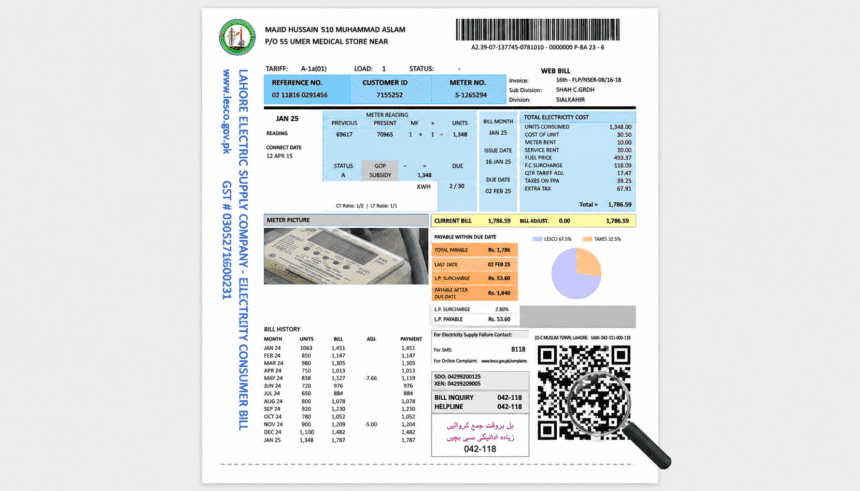
The warning comes just weeks after the government rolled out a new electricity-bill subsidy mechanism meant to make the system more transparent. Under that arrangement, bills for eligible consumers now display the exact subsidy amount and include a QR code tied to registration or verification. Officials said at the time that the idea was to make sure subsidies reach deserving households and to reduce misuse of public funds.
The official platform linked to the programme is the government-backed CSS PITC portal, which describes itself as a Cross Subsidy Program for low-income and deserving households. That matters because the scam appears to work by mimicking a real process that many consumers are only now starting to understand. In other words, the fraud is believable precisely because there is a genuine QR-based subsidy workflow in circulation.
That has made the Power Division’s consumer advisory more urgent than it might otherwise have been. In Pakistan, phishing schemes often succeed not through sophisticated hacking alone, but by exploiting confusion. A user sees a bill, sees a QR code, gets a message about subsidy verification, and assumes the follow-up link must be official. That’s the weak point scammers are clearly targeting here, according to current reporting.
Officials have urged consumers to rely only on verified government channels and, where needed, contact the helplines of their respective electricity distribution companies for help with billing or registration issues. The broader message from the ministry is that the subsidy itself is not being withdrawn through this process; the registration and verification steps are being presented as a way to keep relief targeted and transparent.
For consumers, the practical takeaway is simple: a QR code on a bill does not mean every link shared afterward is legitimate. With the verification system still new and not fully familiar to many households, the government now faces a second challenge alongside subsidy delivery — making sure people can tell the difference between the real process and a polished scam.