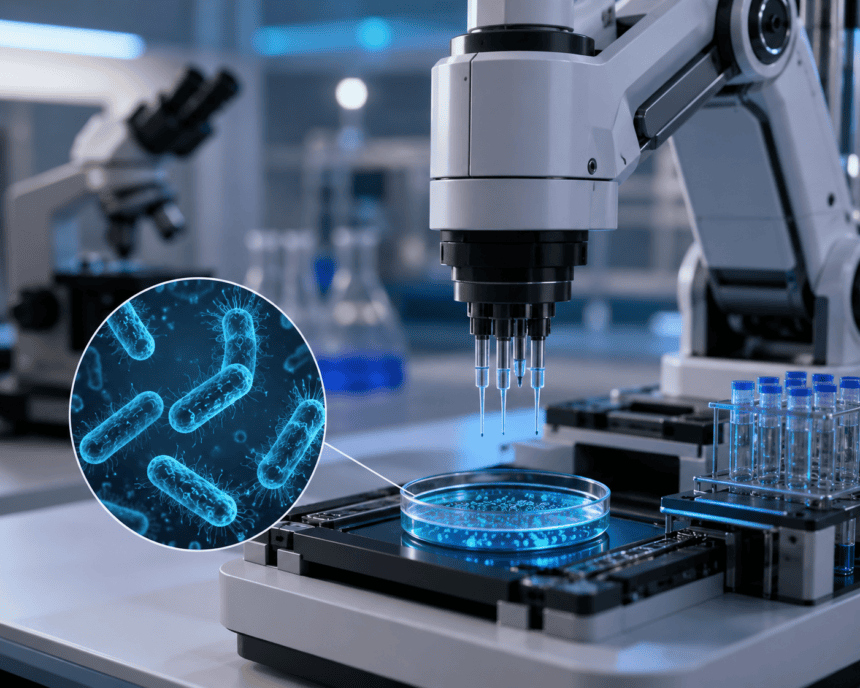
Researchers have developed a new robotic sensing platform capable of identifying bacterial pathogens in minutes rather than days. The system, which combines microfluidic technology with automated machine learning, bypasses the traditional, time-consuming process of culturing samples in a lab.
Current clinical standards for diagnosing bacterial infections—like sepsis or pneumonia—rely on Petri dish cultures. This process often takes 48 to 72 hours, forcing doctors to prescribe broad-spectrum antibiotics while waiting for results. This “wait-and-see” approach frequently leads to antibiotic overuse, fueling the global crisis of drug-resistant superbugs.
The new platform works by trapping individual bacteria on a specialized chip. Once captured, the system uses high-speed sensors to analyze the physical signatures of the cells—such as their size, shape, and light-scattering properties—rather than waiting for them to multiply. An integrated AI algorithm then matches these signatures against a database of known pathogens.
“The bottleneck in modern medicine is the time it takes to know what you’re fighting,” said one of the lead researchers involved in the project. By cutting that window to under an hour, the team aims to provide clinicians with the data needed to switch from broad-spectrum drugs to targeted therapies almost immediately.
The system is currently being tested in clinical settings to ensure it can handle the complexity of human blood and tissue samples, which are far messier than the controlled lab cultures used in initial trials. If the technology scales, it could fundamentally change how hospitals manage infectious disease outbreaks.
While the engineering hurdle of miniaturization remains, the speed of this platform offers a rare shortcut in diagnostic medicine. For a patient in septic shock, those missing 48 hours are often the difference between a full recovery and a fatal outcome.