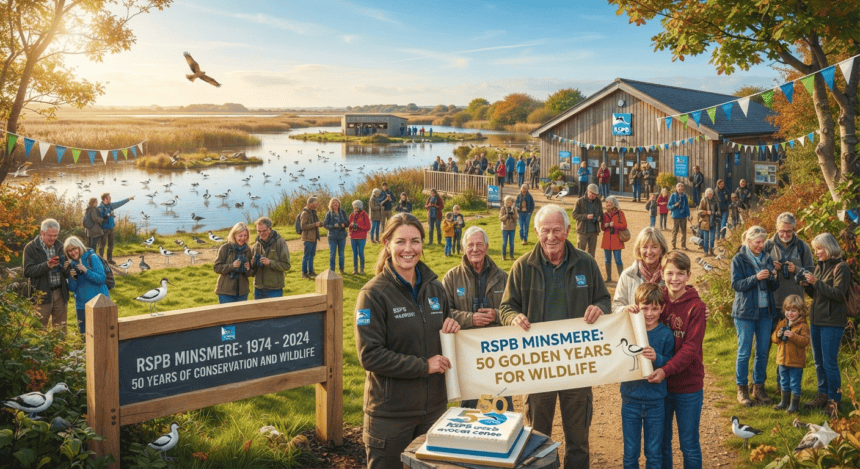
The Royal Society for the Protection of Birds (RSPB) is celebrating a half-century of stewardship at its flagship reserve, marking 50 years since it transformed a former industrial site into a cornerstone of UK conservation.
What began in 1974 as a modest effort to protect local avian populations has evolved into a sprawling wetland sanctuary. Today, it serves as a critical stopover for thousands of migratory birds, proving that damaged landscapes can recover if given the right intervention.
The reserve’s history isn’t just about bird counts. It’s a case study in ecological restoration. Five decades ago, the land was scarred by extraction work; now, it hosts a complex mosaic of reedbeds, lagoons, and meadows. This transition provided a blueprint for how the charity approaches modern “landscape-scale” conservation projects.
“Fifty years ago, we were just trying to save a patch of land,” said one senior site manager. “Now, we’re managing a living, breathing ecosystem that anchors the biodiversity of the entire region.”
Success hasn’t come without friction. Balancing the needs of rare breeding species—like the bittern and marsh harrier—against the rising tide of public footfall has forced the RSPB to adapt its management style. They’ve had to implement strict zoning to ensure that while the public can witness the wildlife, the wildlife isn’t driven away by the very people coming to see it.
Recent data shows the reserve now supports a higher density of breeding pairs than at any point in its recorded history. That’s a stark contrast to the broader trend of declining species across the British countryside.
But the next 50 years look different. Climate change is altering water levels, and the reserve’s team is currently navigating the costly, technical challenge of “climate-proofing” the lagoons. It’s no longer just about guarding the gate; it’s about engineering the environment to survive shifting seasonal patterns.
As the anniversary celebrations conclude this week, the focus shifts to the long-term viability of these habitats. The reserve remains a testament to what happens when conservationists play the long game—but the staff knows better than anyone that nature, even when protected, is never truly finished.