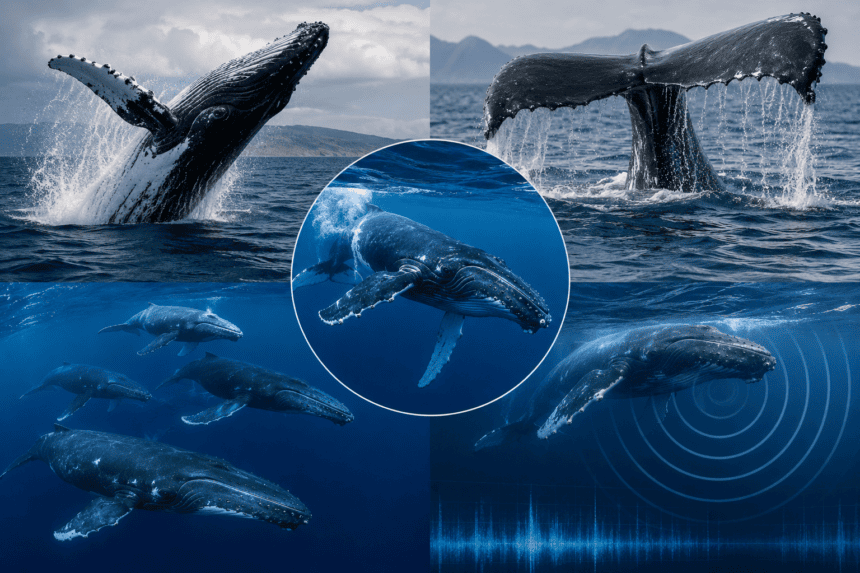
Scientists have uncovered new insights into the behavior of humpback whales, revealing how these magnificent marine mammals communicate, migrate, hunt, and care for their young. The latest research is helping marine biologists better understand one of the ocean’s most intelligent and socially complex whale species.
Researchers monitored humpback whales using satellite tracking, underwater microphones (hydrophones), drones, and behavioral observations. By analyzing thousands of hours of recordings and movement data, scientists discovered new patterns in the whales’ communication and social interactions.
One of the study’s key findings is that humpback whales use a wide range of vocalizations, including their famous complex songs, which can travel for hundreds of kilometers underwater. Scientists believe these songs play an important role in communication, breeding, and maintaining social connections within whale populations.
The research also highlights the whales’ remarkable cooperative hunting behavior. Humpback whales often use a technique called bubble-net feeding, where several whales work together to release circles of bubbles beneath schools of fish, trapping their prey before swimming upward with their mouths open to feed.
Scientists observed that humpback whale mothers maintain close contact with their calves, using gentle body movements and quiet vocal signals to protect and guide them during long migrations. These strong maternal bonds are considered essential for the calves’ survival.
The study also provides new insights into the whales’ annual migrations, which can span thousands of kilometers between cold feeding grounds and warmer breeding waters. Researchers say humpback whales rely on a combination of environmental cues, ocean currents, and possibly Earth’s magnetic field to navigate these extraordinary journeys.
Experts emphasize that understanding humpback whale behavior is crucial for conservation efforts. Human activities such as ship traffic, underwater noise, fishing gear, and climate change continue to pose significant challenges to whale populations worldwide.
Future research using artificial intelligence, satellite technology, and underwater monitoring systems is expected to reveal even more about the lives of these remarkable ocean giants.