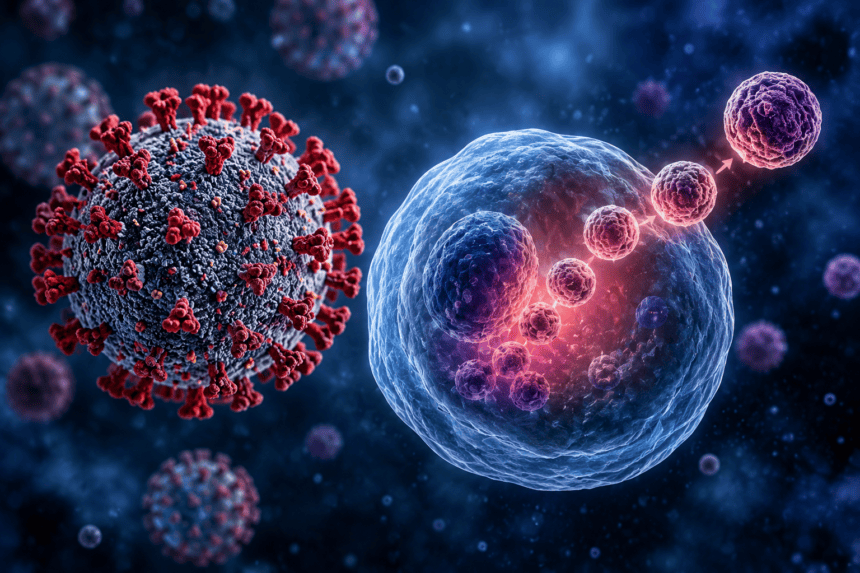
A new international study has found that severe COVID-19 infections can reactivate dormant viruses already present in the human body, potentially leaving behind a long-lasting viral signature even after recovery. The findings offer new insights into why some patients experience prolonged symptoms following severe illness.
Researchers discovered that viruses such as Epstein-Barr virus (EBV) and cytomegalovirus (CMV), which can remain inactive in the body for years, may become active again during severe COVID-19 due to immune system disruption. This viral reactivation was linked to distinct biological changes that persisted after the acute infection.
The study suggests that these reactivated viruses may contribute to inflammation, immune dysfunction, and some symptoms associated with Long COVID, although researchers stress that more studies are needed to establish a direct cause-and-effect relationship.
Scientists say the findings could help improve future diagnostic tools and guide the development of treatments targeting both SARS-CoV-2 and reactivated latent viruses, potentially improving recovery outcomes for patients with severe COVID-19.