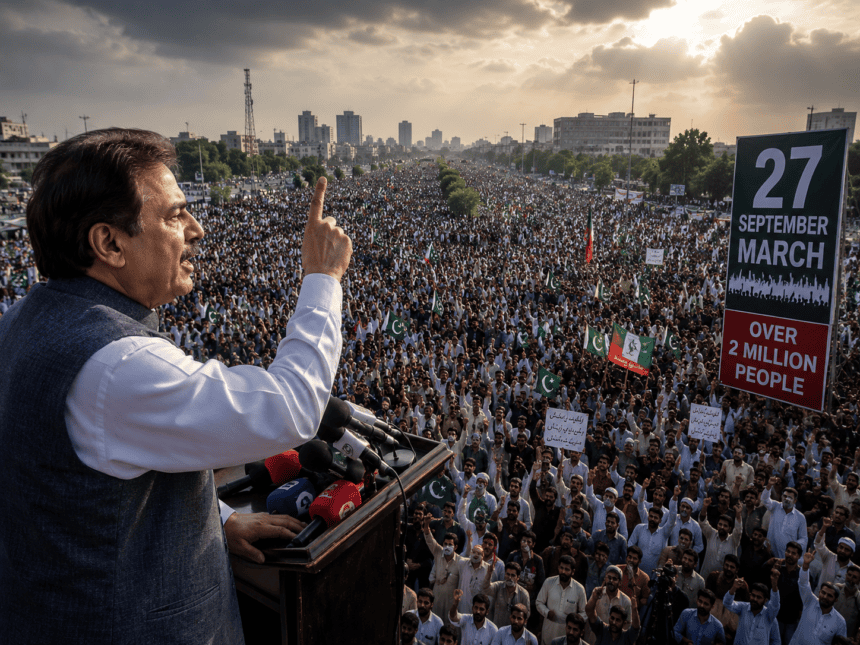
Shafi Jan has issued a bold ultimatum to the authorities, predicting a crowd of two million people will descend on the capital for the planned September 27 march. If the claim holds, it would represent a massive escalation in the ongoing political standoff.
The scale of the projected turnout suggests a calculated attempt to paralyze government functions. Logistics for a gathering of this size—transportation, security, and supply lines—remain largely unverified, yet Jan’s camp maintains that grassroots mobilization has already surpassed initial targets.
“We aren’t asking for permission anymore,” Jan told a group of supporters late Tuesday. “The streets will decide the fate of this administration by sunset on the 27th.”
Critics within the ruling party have dismissed the figure as political posturing, labeling the statement a desperate bid to remain relevant in a tightening media cycle. Security officials, however, are taking a different approach. Sources within the Interior Ministry confirm they are reviewing contingency plans for a “large-scale civil disruption,” though they stopped short of confirming specific troop deployments.
The government’s primary concern isn’t just the headcount; it’s the potential for the protest to turn into an indefinite sit-in. Past demonstrations of this nature have resulted in prolonged gridlock, causing severe economic ripples in the city’s central business district.
For the average citizen, the looming date has become a source of anxiety. Small businesses in the capital are already prepping for closures, and transit authorities are bracing for the inevitable lockdown of major arterial roads.
Whether the turnout hits the two-million mark or falls short, the political temperature has shifted. The government now faces a binary choice: negotiate with a movement that refuses to compromise, or prepare for a confrontation that could define the remainder of their term.