By using this site, you agree to the Privacy Policy and Terms of Use.
Accept
Media HydeMedia Hyde
  • Home
  • Politics
  • Education
  • Entertainment
  • Sports
  • Blogs
  • Business & Commerce
  • Others
    • Religious
    • Metropolitan
    • Climate and Weather
Font ResizerAa
Media HydeMedia Hyde
Font ResizerAa
  • Home
  • Politics
  • Education
  • Entertainment
  • Sports
  • Blogs
  • Business & Commerce
  • Others
    • Religious
    • Metropolitan
    • Climate and Weather
Follow US
© 2026 Media Hyde Network. All Rights Reserved.
Climate and WeatherHeadline

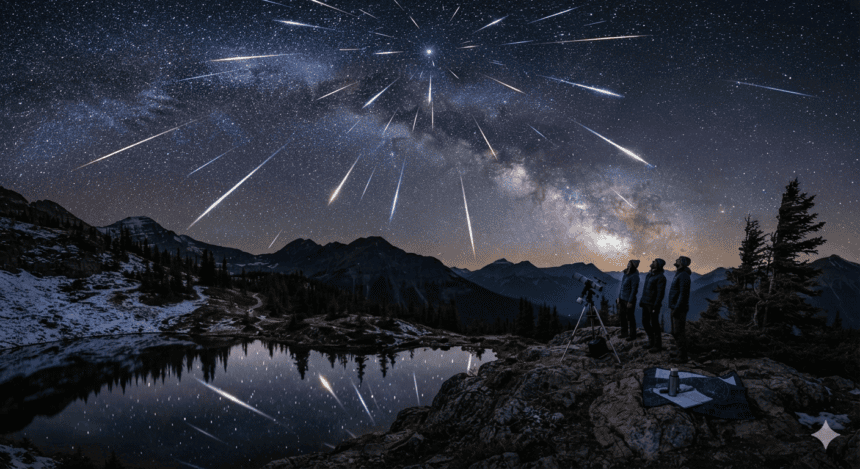
Shooting Stars Set to Dazzle Skywatchers During Meteor Shower Peak

Last updated: August 1, 2026 2:13 am
Haris Ali
Share
Shooting Stars Set to Dazzle Skywatchers During Meteor Shower Peak
SHARE

Skywatchers around the world are preparing for a spectacular celestial display as a meteor shower reaches its peak, offering the chance to witness dozens of brilliant shooting stars streaking across the night sky.

Meteor showers occur when Earth passes through streams of dust and rocky debris left behind by comets or, in some cases, asteroids. As these tiny particles enter Earth’s atmosphere at extremely high speeds, they heat up due to friction with the air and produce bright streaks of light commonly known as shooting stars.

Astronomers say the peak of the meteor shower is expected to provide the best viewing conditions, with observers in dark locations potentially seeing dozens of meteors per hour under clear skies. The exact number visible depends on weather conditions, local light pollution, and the observer’s location.

Scientists explain that most meteors are no larger than grains of sand or small pebbles and burn up completely high above Earth’s surface, posing no danger to people on the ground. Only much larger objects occasionally survive their journey through the atmosphere and reach the Earth’s surface as meteorites.

Experts recommend watching the meteor shower from an open area away from city lights after midnight, allowing your eyes about 20 to 30 minutes to adjust to the darkness. No telescopes or binoculars are required, as meteor showers are best viewed with the naked eye.

Researchers continue to study meteor showers because they provide valuable information about the composition of comets, the evolution of the Solar System, and the small objects that travel through interplanetary space.

Astronomers encourage the public to take advantage of the event, describing meteor showers as one of the most beautiful and accessible astronomical phenomena visible without specialized equipment.


Share This Article
Email Copy Link Print
Previous Article Bright Comet Gives Scientists New Clues About the Early Solar System Bright Comet Gives Scientists New Clues About the Early Solar System
Next Article Scientists Track Asteroid to Learn More About the Early Solar System Scientists Track Asteroid to Learn More About the Early Solar System
Leave a Comment

Leave a Reply Cancel reply

Your email address will not be published. Required fields are marked *

Sponsored Ads

Stay Connected

FacebookLike
XFollow
InstagramFollow
YoutubeSubscribe
WhatsAppFollow
ThreadsFollow
Scientists Uncover New Clues About the Mighty Giganotosaurus
Climate and Weather Headline
August 1, 2026
New Study Reveals Fresh Insights Into Ankylosaurus Defense Mechanisms
Climate and Weather Headline
August 1, 2026
Scientists Track Asteroid to Learn More About the Early Solar System
Climate and Weather Headline
August 1, 2026
Bright Comet Gives Scientists New Clues About the Early Solar System
Climate and Weather Headline
August 1, 2026
Scientists Reveal New Secrets About Saturn and Its Iconic Rings
Climate and Weather Headline
August 1, 2026
Scientists Explore the Possibility of Parallel Universes
Climate and Weather Headline
August 1, 2026

You Might Also Like

Climate and Weather

Mild Afternoon Ahead After Frosty Morning; Warm Weekend Expected Before Wintry Turn Early Next Week

By
Wajeeha Batool
Climate and Weather

Dry Weather Expected Across Sindh, Cold Mornings and Nights Ahead

By
Wajeeha Batool
SUPARCO Predicts Muharram Moon Sighting for July 7
Climate and WeatherHeadline

SUPARCO Predicts Muharram Moon Sighting for July 7

By
Ayesha Masood
Lawyers Call Nationwide Protests Over JCP Appointment Process
HeadlinePolitics

Lawyers Call Nationwide Protests Over JCP Appointment Process

By
Haris Ali
Media Hyde Media Hyde Dark
Facebook Twitter Youtube Rss Medium

About US

Media Hyde Network: Your instant connection to breaking stories and live updates. Stay informed with our real-time coverage across politics, tech, entertainment, and more. Your reliable source for 24/7 News.

Top Categories
  • Headline
  • Politics
  • Entertainment
  • Education
  • Sports
  • Religious
  • Metropolitan
  • Climate and Weather
Usefull Links
  • Contact Us
  • Disclaimer
  • Privacy Policy
  • Cookies Policy
  • Advertising Policy
  • Terms & Conditions

© 2025 Media Hyde Network. All Rights Reserved.

Welcome Back!

Sign in to your account

Username or Email Address
Password

Lost your password?