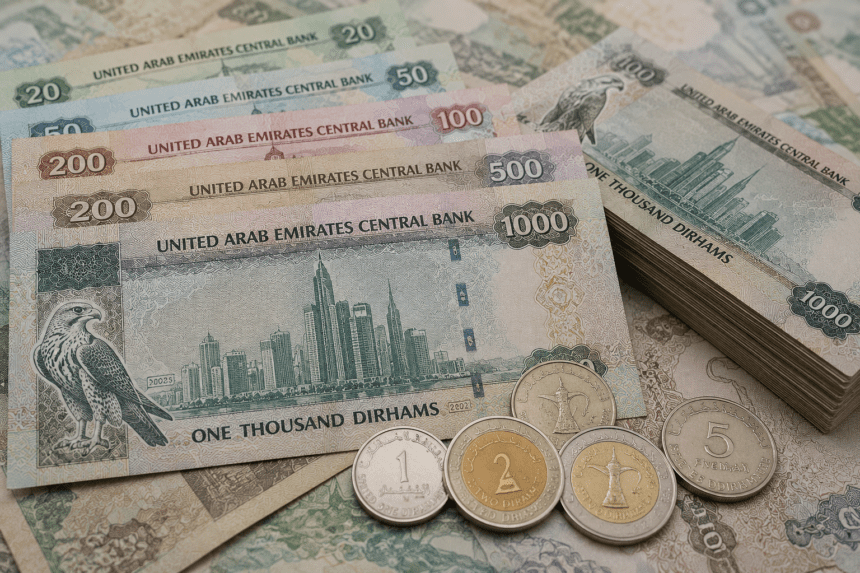
The UAE Dirham is trading at PKR 75.82 today, May 18, showing minimal fluctuation as the Pakistani Rupee maintains a fragile stability in the interbank market.
For the average citizen sending or receiving remittances, the rate offers little relief from the high cost of living. While the currency hasn’t seen the sharp daily jumps of previous months, the current valuation keeps the cost of imported goods—and the burden on families reliant on Gulf-based income—firmly in place.
Market analysts point to the State Bank of Pakistan’s tight monetary stance as the primary anchor for this stagnation. With foreign exchange reserves hovering at levels that barely cover two months of imports, the central bank remains hesitant to allow any significant appreciation of the Rupee. Every move in the Dirham-Rupee pair is currently governed more by policy intervention than by organic market demand.
“The market is in a holding pattern,” said a Karachi-based currency trader who monitors Gulf flows. “Demand for the Dirham remains constant, but liquidity is thin. Traders aren’t taking big positions because they’re waiting for the next round of fiscal data.”
This lack of movement masks deeper structural issues. Pakistan’s reliance on remittances from the UAE—one of its largest sources of foreign currency—has become the primary buffer against a balance-of-payments crisis. When the Rupee weakens, the purchasing power of those remittances drops, hitting household budgets in cities like Lahore, Rawalpindi, and Karachi particularly hard.
Despite the relative calm in today’s trading, the outlook remains precarious. Inflationary pressures in Pakistan continue to outpace any gains the Rupee might make against the Dirham. For those watching the ticker, the current rate of 75.82 is not a sign of recovery; it is a snapshot of an economy stalled, waiting for the next external shock or policy shift to break the deadlock.