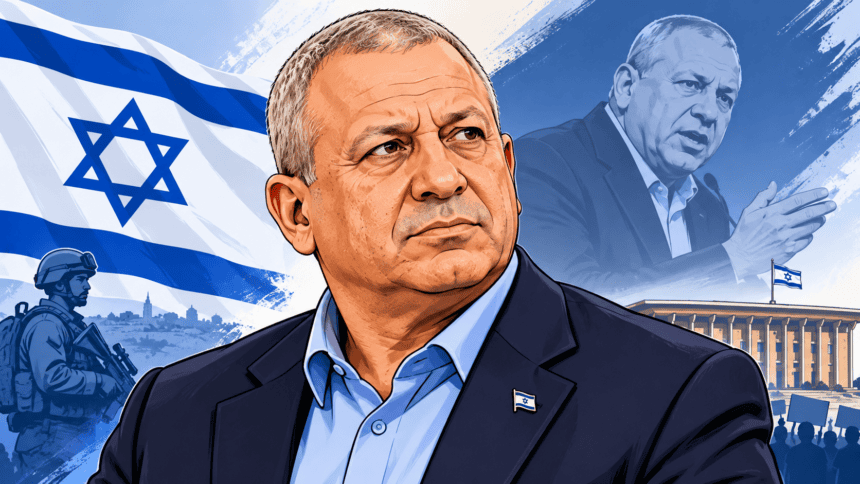
Gadi Eisenkot is not a career politician. He is a career soldier, a former Chief of Staff of the Israel Defense Forces (IDF), and a man who spent 40 years in uniform before entering the Knesset. Today, he sits as a central figure in Israel’s political opposition, navigating a landscape defined by the ongoing war in Gaza and deep internal fractures.
A former commander of the Golani Brigade, Eisenkot rose to the top of the military hierarchy to serve as the 21st Chief of General Staff from 2015 to 2019. He was known for a doctrine of “deterrence through overwhelming force”—a strategy that defined his tenure but left him with a complex legacy regarding the long-term containment of Hamas.
When the October 7 attacks shattered Israel’s security paradigm, Eisenkot did not stay on the sidelines. He joined Prime Minister Benjamin Netanyahu’s emergency war cabinet as an observer. It was a move aimed at national unity rather than political alignment. He brought the gravity of a man who had spent decades planning for the exact contingency that had just unfolded.
His time in the war cabinet was marked by friction. Eisenkot became a vocal critic of the government’s lack of a “day after” plan for Gaza. He argued that military gains were being squandered by the absence of a clear political strategy. By June 2024, he and Benny Gantz resigned from the cabinet, citing Netanyahu’s failure to prioritize the return of hostages over his own political survival.
The tragedy of the war hit Eisenkot personally. In December 2023, his son, Master Sgt. Gal Meir Eisenkot, was killed in action in Gaza. A week later, his nephew, Maor Cohen Eisenkot, also died in combat. These losses transformed him from a distant military strategist into a grieving father, a role that has lent his critiques of the war’s management a searing, personal weight.
He remains a member of the National Unity party, positioning himself as a pragmatic alternative to the current coalition. He advocates for a deal to return the hostages and a recalibration of Israel’s security goals. To his supporters, he is a voice of reason in a room full of ideologues; to his detractors, he is a representative of the security establishment that failed to prevent the October 7 catastrophe.
Eisenkot’s influence today rests on his reputation as a “responsible adult.” As the Israeli public debates the future of the war and the leadership of the country, he offers a vision rooted in military realism. Whether that translates into a viable path toward national recovery is the question that defines his current political life.