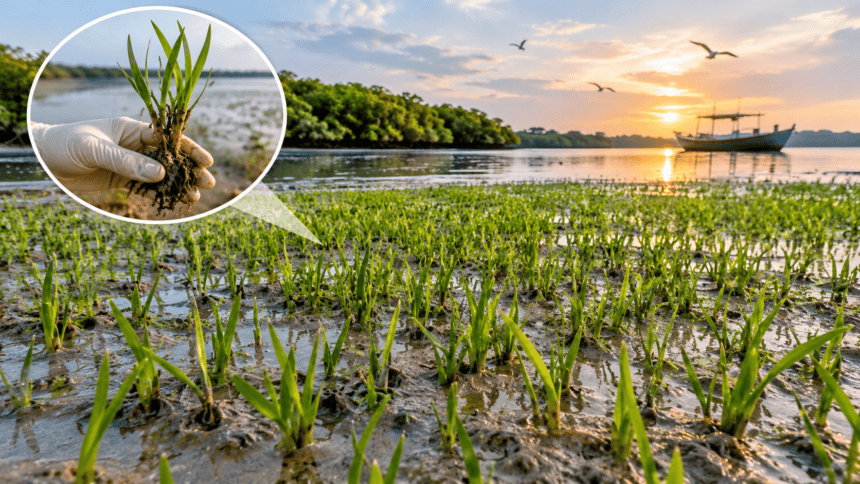
Hundreds of new seagrass shoots have taken root in the estuary this week, marking a rare comeback for an ecosystem long choked by industrial runoff and rising temperatures. Marine biologists spotted the dense clusters during a routine survey Tuesday, confirming that the underwater meadows are finally reclaiming ground lost to decades of environmental neglect.
The discovery comes after three years of aggressive restoration efforts. Local authorities spent millions dredging toxic sediment from the estuary floor, an attempt to improve water clarity and allow sunlight to reach the seabed. For years, the murky water acted as a barrier, effectively starving the native flora of the energy needed for growth.
“We expected a slow crawl, not a sprint,” said Dr. Elena Vance, the lead researcher on the project. “Seeing this many shoots in a single sector suggests the sediment quality has shifted enough to support a permanent colony.”
Seagrass serves as the lungs of the estuary, filtering nutrients and providing a critical nursery for juvenile fish. Its decline had ripple effects, leading to a noticeable drop in local shellfish populations and a rise in algae blooms that further degraded water quality.
Despite the progress, the ecosystem remains fragile. The new shoots occupy only a fraction of their historical range, and a single extreme weather event or a spike in pollutants could wipe out the gains made over the last thirty-six months.
Environmental groups are already pushing for stricter runoff regulations for nearby factories. They argue that without tighter controls, the current recovery will be nothing more than a temporary reprieve for a habitat that is still on the brink.
For now, the restoration team plans to monitor the site daily. If the shoots survive the coming month, they intend to expand the planting project to the northern bank of the estuary by early spring. The survival of these few hundred plants remains the only real indicator of whether the estuary can sustain itself without human intervention.