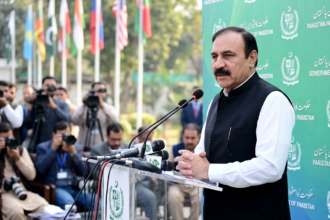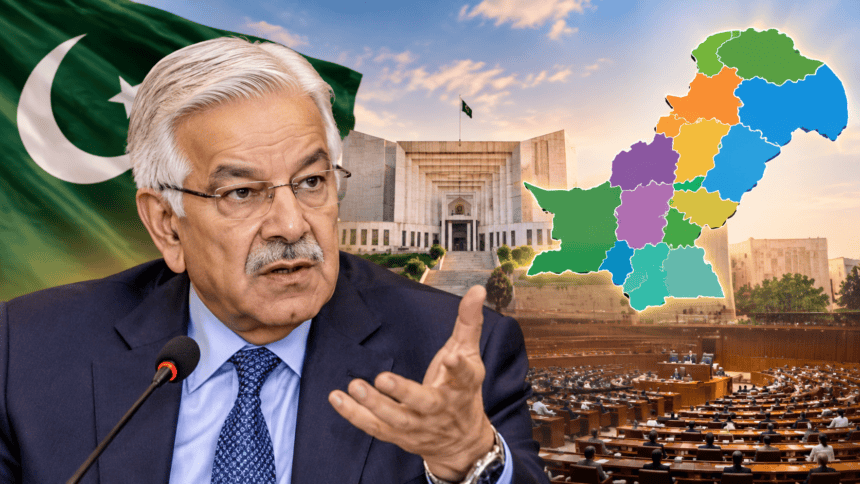
Defense Minister Khawaja Asif has reignited the debate over Pakistan’s administrative structure, suggesting the creation of as many as 12 new provinces to improve governance. His remarks, delivered during a recent session, mark a departure from the traditional political reluctance to redraw provincial boundaries.
Asif argued that the current four-province model is failing to deliver services to the grassroots level. He pointed to the vast geographic and demographic disparities within existing provinces, suggesting that smaller, administratively manageable units would increase accountability.
The proposal isn’t entirely new, but the scale—12 provinces—is striking. Critics and proponents alike have long argued that the 18th Amendment, which devolved significant power to the provinces, remains largely ineffective because that power rarely reaches the districts. Asif’s suggestion implies that the problem isn’t just the distribution of power, but the size of the entities holding it.
However, the political cost of such a move is immense. Redrawing maps requires a constitutional amendment, which demands a two-thirds majority in Parliament. Given the current polarization between the ruling coalition and the opposition, passing such a sweeping change is a tall order.
Regional parties have historically viewed the creation of new provinces with suspicion. In Sindh and Balochistan, talk of new administrative units is often met with accusations of attempts to dilute ethnic or regional political dominance. Asif’s push will likely face stiff resistance from those who fear that breaking up provinces will weaken their political strongholds.
The defense minister’s comments also underscore a growing frustration within the federal government regarding the performance of provincial administrations. As the country faces persistent economic instability, the debate over whether “smaller is better” for governance is likely to intensify.
Whether this is a genuine policy push or a tactical distraction from current economic woes remains the central question. For now, the proposal sits on the table, challenging the status quo while offering no clear path through the legislative minefield required to make it a reality.