Hiccups can appear out of nowhere. You may be eating, laughing, drinking something or simply sitting quietly when suddenly that familiar “hic” interrupts you. Although hiccups can be annoying, they are usually harmless and temporary.
What Causes Hiccups?
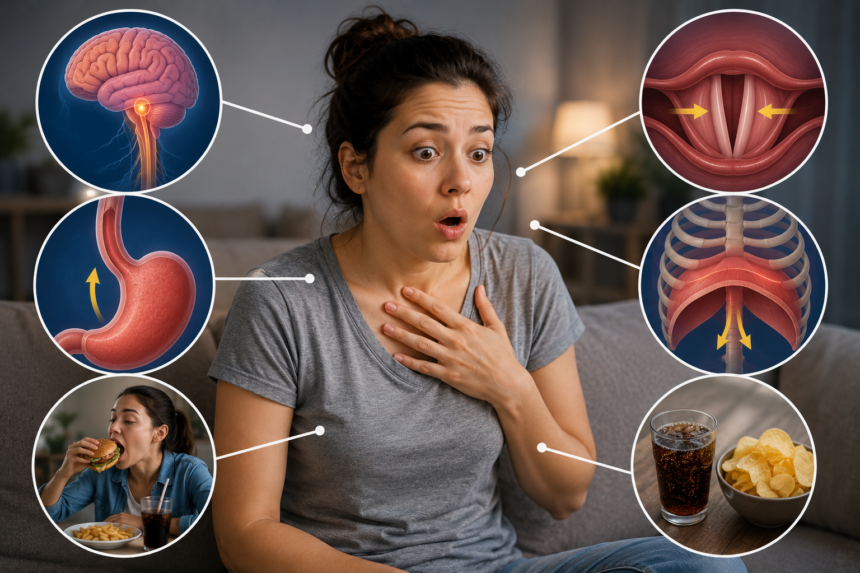
Hiccups happen when the diaphragm, the muscle that helps you breathe, suddenly contracts involuntarily. Immediately afterward, the vocal cords close briefly, producing the characteristic “hic” sound.
Several everyday things can trigger this reflex. Eating too quickly, drinking carbonated beverages, eating a large meal, consuming alcohol, swallowing air, sudden temperature changes and emotional excitement can all contribute to hiccups.
Why Do They Sometimes Start Suddenly?
The diaphragm is controlled by nerves, including the phrenic and vagus nerves. When these nerves become irritated or stimulated, they can trigger an involuntary diaphragm contraction.
This is why hiccups can seem to start for no obvious reason. Often, a small trigger has affected the diaphragm or the nerves involved in breathing without you noticing.
How Long Do Hiccups Usually Last?
Most episodes last only a few minutes and disappear on their own. Simple measures such as slowly drinking water, holding your breath briefly or breathing calmly may sometimes help, although there is no guaranteed method that works for everyone.
When Should Hiccups Be a Concern?
Occasional hiccups are generally nothing to worry about. However, hiccups that continue for more than 48 hours are considered persistent and may sometimes be associated with an underlying medical condition or medication.
Long-lasting or severe hiccups can interfere with eating, sleeping and breathing. In such cases, it is important to speak with a healthcare professional.
The Bottom Line
Sudden hiccups are usually caused by an involuntary spasm of the diaphragm. Everyday habits such as eating quickly, drinking fizzy beverages or swallowing air can trigger them. While ordinary hiccups usually disappear quickly, prolonged episodes should be medically evaluated.