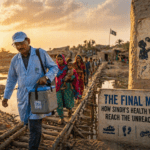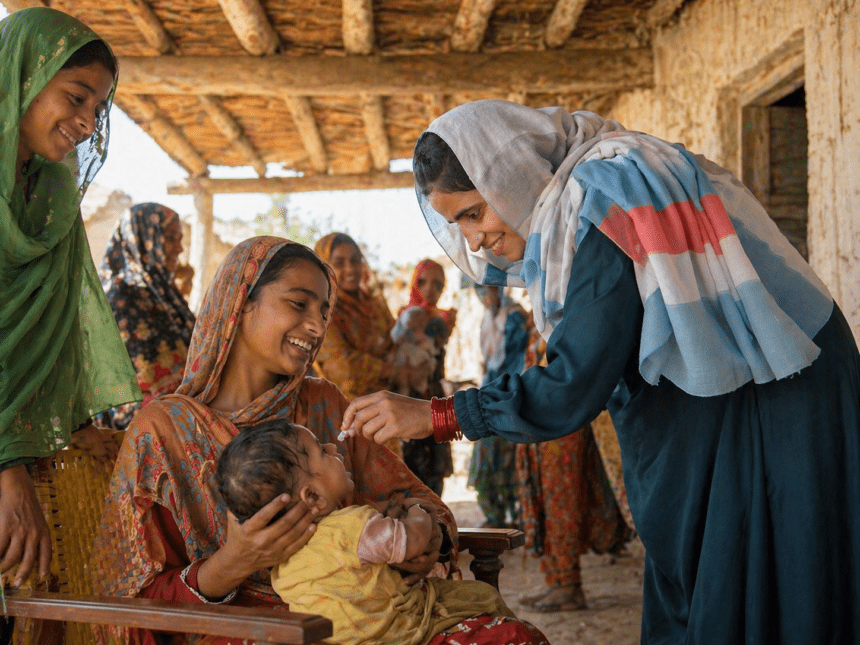
They start before the sun is fully up, armed with blue cooler boxes and handwritten lists of names that determine the future of Pakistan’s health. These are the women vaccinators—the only reason the country stands on the brink of eradicating polio.
Pakistan remains one of the last two countries where wild poliovirus still paralyses children. The fight isn’t just medical; it’s a door-to-door grind through blistering heatwaves, flood-hit plains, and high-security zones where the mere presence of a vaccinator can be a death sentence.
“I don’t do this for the money,” says Salma, a veteran health worker in Peshawar who asked to use only her first name for security reasons. “I do it because if I don’t knock on that door, no one else will. This work chose me.
” Her sentiment is shared by over 350,000 workers—the vast majority of them women—who form the backbone of the National Polio Eradication Programme. In many conservative pockets of the country, cultural norms bar male health workers from entering homes.
Without these women, millions of children would remain invisible to the healthcare system. They aren’t just delivering drops; they’re debunking deep-seated myths, navigating parental refusals, and acting as the first line of defense against a range of preventable diseases beyond just polio. The cost of this service is staggering. Since 2012, more than 100 people involved in polio vaccination drives have been killed in targeted attacks. Yet, when the next campaign starts, the women return.
They walk miles daily, often for a stipend that barely covers their own transport, motivated by a grit that policy papers struggle to capture. The government recently launched its latest nationwide drive, targeting over 45 million children under five.
It comes at a critical juncture. Environmental samples continue to test positive for the virus in various provinces, signaling that the virus is still circulating and the window for total eradication is narrowing. The success of the global mission to end polio doesn’t rest in high-level meetings in Geneva or Islamabad.
It rests in the hands of women like Salma, walking the next mile, knocking on the next door, and refusing to let another child lose the ability to walk.