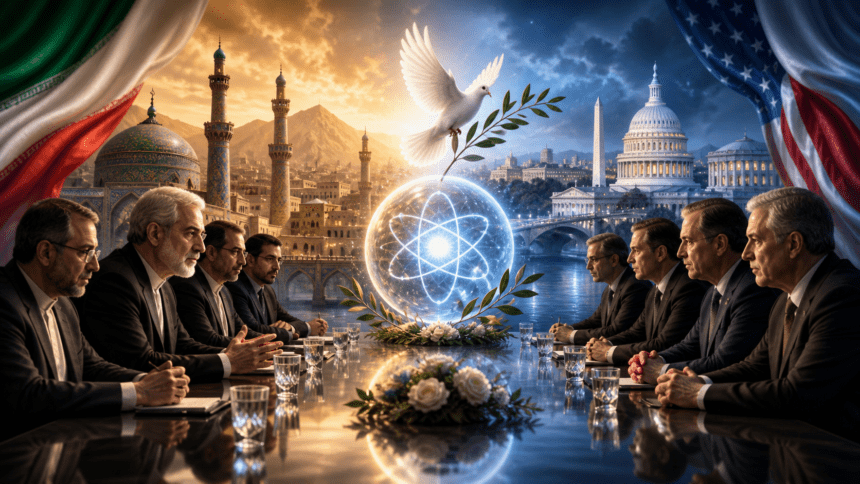
Iran appears to be signaling a more flexible posture in its indirect talks with the United States, as recent reporting says Tehran sent a new proposal through Pakistan in an effort to revive stalled diplomacy. Iranian state-linked reporting said the text was delivered to Islamabad on May 1, 2026, while other coverage suggests the latest message is being read as softer in tone than some earlier positions, even though the main disputes are still unresolved.
That does not mean a breakthrough has been reached. The central disagreement remains over sequencing: Iran has tried to prioritize immediate de-escalation measures, including issues linked to the Strait of Hormuz and broader regional tensions, while pushing fuller nuclear discussions to a later stage. Washington, however, still wants the nuclear question addressed directly in any lasting agreement.
Pakistan’s role has become increasingly important because it is acting as a backchannel between Tehran and Washington at a delicate moment. Recent reports say mediators still believe an agreement is possible and that efforts are continuing to narrow the remaining gaps. That quiet channel has helped keep diplomacy alive even as the formal process has slowed.
For now, the flexibility being discussed looks more tactical than transformative. Tehran seems willing to keep talking and adjust its wording, but there is still no clear sign that either side has moved enough on the core nuclear issue to guarantee a deal. The latest proposal is best understood as an attempt to keep negotiations from collapsing, not as proof that the hardest disagreements have been solved.