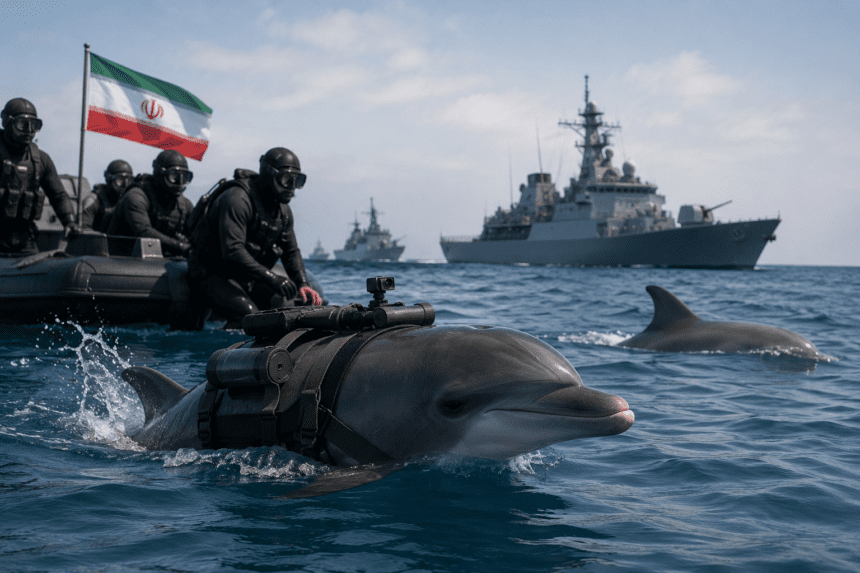
Pentagon officials recently addressed unusual reports about Iran’s so-called “deadly dolphins,” sparking global attention and debate.
During a press briefing, U.S. defense leaders were asked about claims that Iran might be using trained dolphins as weapons—sometimes described as “kamikaze dolphins” capable of carrying explosives or attacking ships. The question came after media reports suggested Iran could revive an old Soviet-era program involving military-trained marine animals.
Pentagon officials, including senior military leaders, reacted with skepticism and even humor. They dismissed the idea, saying there is *no evidence that Iran currently has such a capability*. One official compared the claim to something fictional, like “sharks with laser beams,” highlighting how unlikely the scenario sounds.
However, the discussion is not entirely baseless. Historically, both the United States and the former Soviet Union have trained dolphins and sea lions for non-lethal military purposes such as detecting underwater mines, identifying intruders, and protecting harbors. These animals are valued for their intelligence and natural sonar abilities.
The renewed focus on “deadly dolphins” reflects broader tensions in the region, especially around the strategically important Strait of Hormuz. Analysts say even unusual or unconventional ideas like this often emerge during periods of geopolitical conflict and information warfare.