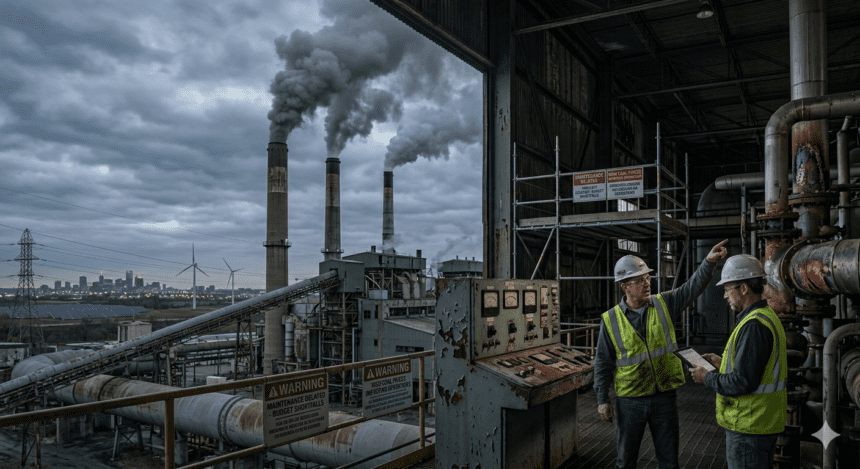
Donald Trump’s campaign promise to revive the American coal industry is colliding with cold, hard market math. Power companies across the country are finding that keeping aging, inefficient coal plants on life support is bleeding their budgets dry, with costs now climbing into the hundreds of millions.
These expenses aren’t just appearing on corporate ledgers; they are landing directly on consumer utility bills. In states like Wyoming and West Virginia, regulatory mandates aimed at preventing coal plant closures have forced utilities to sink capital into facilities that struggle to compete with cheaper natural gas and plummeting wind and solar costs.
“It’s a forced subsidy for a dead-end technology,” said Sarah Miller, a senior energy analyst at the Climate Policy Institute. “Utilities are being told to keep the lights on with coal, but the market abandoned coal years ago.”
In Montana, NorthWestern Energy recently faced a firestorm of criticism over the costs associated with the Colstrip power plant. While the company cited regulatory pressure to keep the units running, the price tag for maintenance and compliance upgrades has ballooned, forcing the utility to seek rate hikes to cover the shortfall. It’s a recurring pattern: the more a plant ages, the more it costs to keep it compliant with environmental standards and functional for the grid.
The political strategy relies on the idea of energy independence, framing coal as a “baseload” necessity. However, grid operators tell a different story. The Midcontinent Independent System Operator (MISO) and other regional grid managers have repeatedly warned that the reliability of the grid depends on diversifying fuel sources—not doubling down on the most expensive ones.
For the utilities caught in the middle, the mandate creates a lose-lose scenario. They face pressure from the White House to maintain a coal-heavy footprint, yet they answer to shareholders and public utility commissions that demand fiscal responsibility. When those two forces clash, it’s the ratepayer who ultimately picks up the tab.
The financial burden is expected to grow as more plants reach the end of their operational lifespan. With no clear plan to offset these rising costs, the gap between political rhetoric and the reality of energy markets is only widening, leaving taxpayers to fund a transition that has stalled.