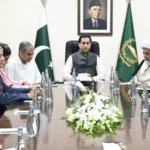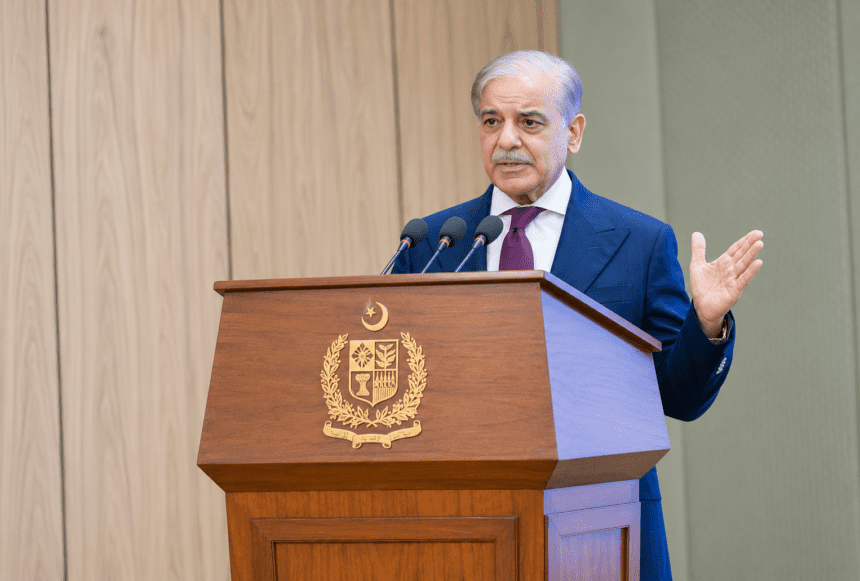
The federal government has begun reviewing a proposed Rs1.51 trillion Public Sector Development Programme (PSDP) for FY2026-27, with Prime Minister Shehbaz Sharif signaling that next year’s development money will not be spread around evenly. Instead, ministries and divisions that have delivered better results are likely to be rewarded, while weaker performers could see their allocations squeezed. That gives the exercise a harder edge than a routine pre-budget review.
At the center of the debate is a simple, uncomfortable gap: the Planning Ministry’s broader requirement for ongoing and proposed federal development schemes has been reported at Rs2.9 trillion, but the Finance Ministry has set an indicative ceiling of Rs1.126 trillion for the federal PSDP. In other words, Islamabad is trying to fit very large ambitions into a much smaller fiscal envelope.
That funding mismatch explains why the current review matters. The Rs1.51 trillion figure being discussed reflects an attempt to preserve a meaningful development programme, but it still sits above the finance-side cap and therefore faces pressure before the budget is finalized. The fight now is not only about how much money is available, but which projects survive the trimming.
Shehbaz’s message, according to reporting on the review meeting, is that development spending should be tied more closely to performance and visible economic returns. Priority areas flagged in coverage include water reservoirs, hydropower and projects with tangible output, alongside a push to use public-private partnerships more aggressively where the state cannot fully carry the burden alone. That suggests the government is trying to make the PSDP look less like a political distribution exercise and more like a filtered investment plan.
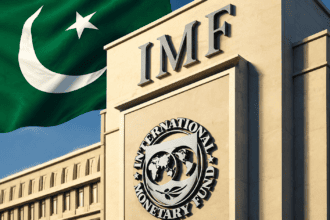
There is also an IMF-shaped backdrop to all this. Recent reporting says Pakistan has told the Fund that new projects in FY27 will account for less than 10% of total PSDP allocations, with the larger share of scarce resources going toward completing existing schemes. Officials have also indicated that a new project appraisal framework has been finalized and is expected to be placed before ECNEC by the end of June 2026. That is a pretty clear sign that the government is under pressure to curb the old habit of launching fresh schemes before older ones are properly funded or finished.
The squeeze becomes even more striking when set against this year’s development performance. According to recent reporting based on the Monthly Development Update for May 2026, PSDP utilisation in the first ten months of FY26 was only 56%, with ministries and divisions receiving Rs571.2 billion in releases during July-April but actually spending about Rs469.9 billion, leaving an 18% utilisation gap. So the government is not only dealing with a shortage of money; it is also dealing with a problem of absorption and execution.
That is why the politics of the upcoming budget will likely revolve around selectivity. A smaller, more disciplined PSDP can help Islamabad stay aligned with fiscal constraints, but it also means some ministries, lawmakers and regions will inevitably feel shortchanged. Development budgets in Pakistan are never just about economics; they are also about visibility, patronage, and who gets to claim a road, dam, hospital or university in the next election cycle. The stricter the ceiling, the sharper those choices become. The reported numbers now suggest those choices are arriving fast.
For now, the story is less about one final number and more about the direction of travel. Shehbaz appears to be pushing for a development programme that is narrower, more performance-driven and more tightly aligned with fiscal reality. Whether that survives the final budget negotiations is another matter. On paper, everyone agrees on prioritisation. In practice, the PSDP is where fiscal discipline and political demand usually collide.