ISLAMABAD: The Islamabad High Court has asked the Capital Development Authority to submit its reply in appeals filed by residents and sub-lessees of One Constitution Avenue, as the legal battle over Islamabad’s high-profile luxury towers shifts from the developer’s default to the fate of people who bought or occupied apartments there.
A division bench comprising Justice Muhammad Azam Khan and Justice Raja Inaam Ameen Minhas issued notices to the CDA while hearing intra-court appeals filed by 20 apartment sub-lessees. The court directed the civic agency to respond by Wednesday. The appellants include former Pakistan Cricket Board chairman Ehsan Mani and former air chief Mujahid Anwar Khan, according to reports from the proceedings.
The appeals challenge a single-bench judgment that had upheld CDA’s cancellation of the project’s lease and held that apartment buyers could not claim independent ownership rights once the developer’s lease itself was found to be invalid. That finding, especially the observation that third-party purchasers would “sink or sail” with the original lessee, has become the centre of the latest litigation.
The residents argue that their possession and sub-lease rights were recognised over the years and should not be wiped out without due process. In their plea, they asked the court to stop CDA from interfering with their peaceful possession and to declare their acquired rights legal and enforceable. Their lawyers also referred to earlier Supreme Court directions that had called for a fair and secure arrangement to deal with third-party claims in the project.
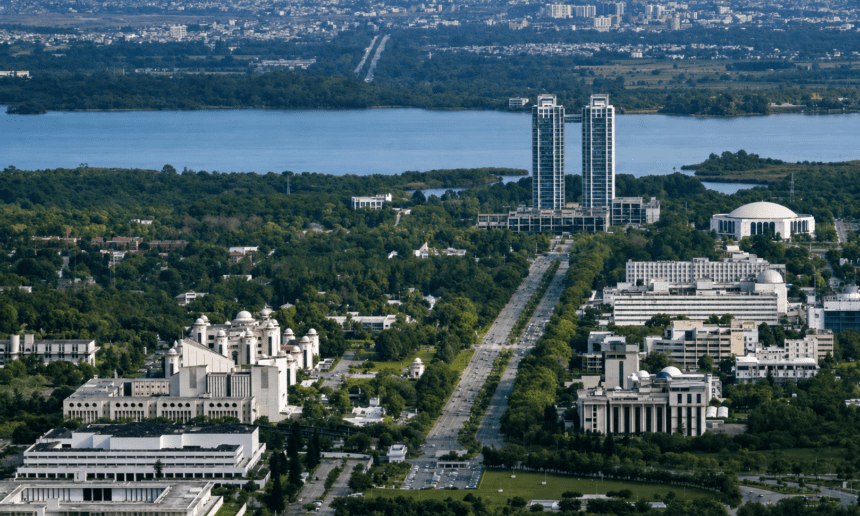
The One Constitution Avenue dispute goes back to a 2005 lease agreement between CDA and BNP (Private) Limited for a five-star hotel project on 13.5 acres near the Convention Centre. Over time, the development turned into a luxury residential and commercial complex, drawing investors, overseas Pakistanis and prominent public figures. The controversy deepened after CDA cancelled the lease over alleged payment defaults running into billions of rupees.
Earlier this month, IHC Chief Justice Sardar Muhammad Sarfraz Dogar upheld CDA’s action, ruling that BNP had failed to meet the financial obligations laid down under the Supreme Court framework, including timely instalment payments and acceptable bank guarantees. The court found that CDA had acted within the law after giving notices and opportunities to cure the default.
But for residents, the issue is no longer just between CDA and BNP. Their case is that ordinary purchasers and sub-lessees — many of whom say they invested in good faith — should not be treated as collateral damage in a dispute between the developer and the authority.
The Bank of Punjab has also filed a separate intra-court appeal against the same judgment, although the IHC Registrar’s Office raised objections to its maintainability. The bank says it is directly affected because BNP had obtained a loan from it and later paid money to CDA. Documents cited in reports show the bank acquired three floors — lower ground, upper ground and first floor — measuring around 25,420 square feet for a branch in the project.
Another layer was added after residents claimed that CDA had taken control of the towers following the lease cancellation and had itself acknowledged the status of sub-lessees by overseeing building affairs through a committee. A report on one residents’ appeal said the appellants maintained that they continued living in the apartments under CDA-supervised arrangements even after the cancellation.
The matter gained urgency after residents began vacating apartments on May 1 amid heavy police presence, the same day the single-bench ruling upheld CDA’s lease cancellation. Reports from the site said belongings were shifted out on mini trucks while police and local administration officials were present inside the towers.
The division bench’s next hearing will be closely watched because its decision may determine whether the case remains a straightforward lease-default matter — or whether the court carves out protection for third-party buyers who were not direct parties to the original CDA-BNP agreement.
For now, CDA has been called in to explain its position. And for the residents of one of Islamabad’s most expensive addresses, that reply could decide whether their fight is about compensation, possession, or both.