ASIA:
A developing El Niño weather pattern is bringing intense heat across large parts of Asia, raising serious concerns over agricultural production and food security as key crops begin to suffer under extreme temperatures.
Meteorologists report that the strengthening El Niño phenomenon is disrupting normal rainfall patterns and increasing heatwaves across South and Southeast Asia. Countries dependent on monsoon rains are particularly vulnerable, as delayed or weakened rainfall is affecting planting cycles and crop growth.
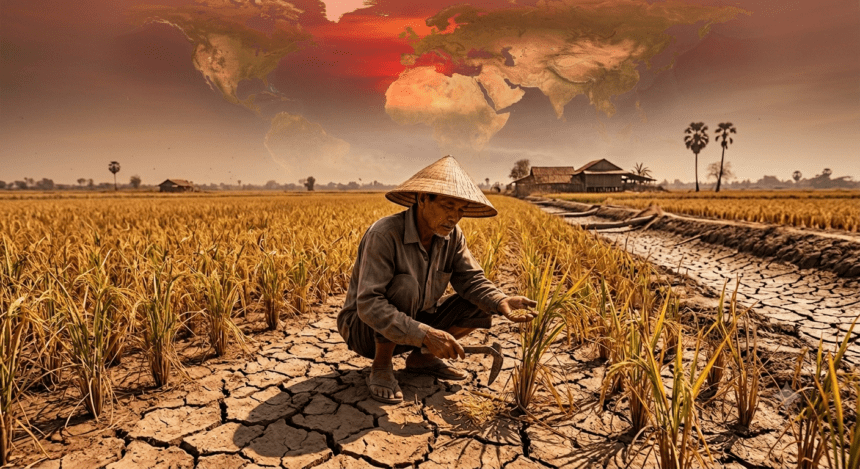
Farmers in several regions are reporting stress on major staples such as rice, wheat, and maize. Prolonged dry spells combined with soaring temperatures are reducing soil moisture levels, which can significantly lower yields if conditions persist.
Agricultural experts warn that the situation could worsen in the coming months if El Niño continues to intensify. Reduced water availability for irrigation and increased evaporation rates are already placing additional pressure on farming communities.
In some areas, governments are being urged to prepare contingency plans, including water management strategies and crop diversification, to reduce potential losses. Analysts say that food prices could also rise if production declines further.
While El Niño is a naturally occurring climate phenomenon, climate change is believed to be increasing the severity and unpredictability of such events, making agricultural planning more challenging across the region.