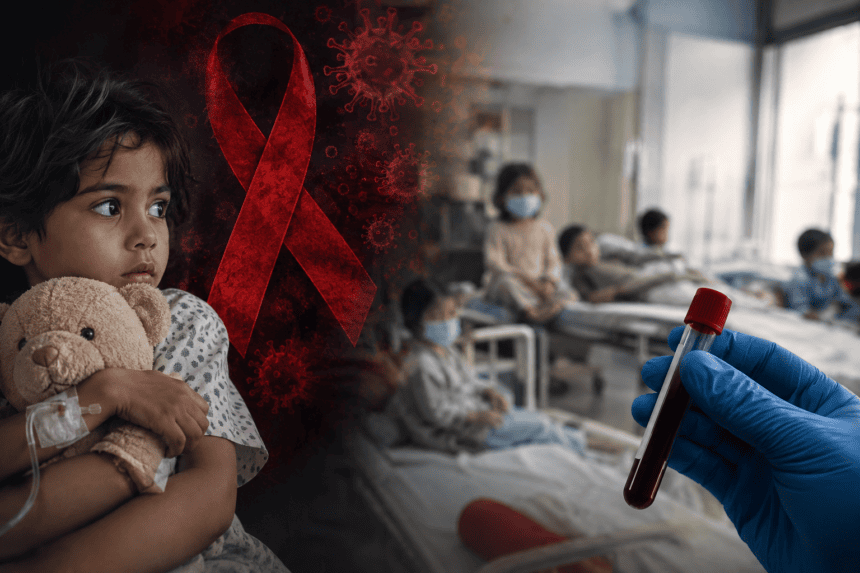
Sixteen more children have tested positive for HIV at Karachi’s Valika Hospital, marking a grim expansion of an outbreak that has already devastated families across the city. Health officials confirmed the new cases late Tuesday, bringing the total number of pediatric infections linked to the facility to a level that has triggered an immediate provincial inquiry.
The latest results surfaced during routine screening of patients who had received treatment at the hospital’s pediatric ward. For the families involved, the diagnosis is a life-altering blow. Many of these children were admitted for minor ailments, only to leave with a virus that requires a lifetime of specialized medical care.
Sindh’s health department has suspended the hospital’s pediatric blood transfusion services while investigators comb through its sterilization protocols. Preliminary findings suggest a breakdown in medical safety standards. Investigators are looking at everything from the reuse of syringes to the screening process for blood donations—a standard procedure that appears to have been bypassed.
“We are looking at systemic negligence,” a senior health official told reporters on condition of anonymity. “You don’t get 16 positive cases in a single ward by accident. Someone skipped a step, and these children are paying the price.”
The incident mirrors similar outbreaks in Larkana and Ratodero, where poor medical hygiene fueled the spread of the virus. Despite those past lessons, the recurring nature of these infections suggests that the provincial health infrastructure remains dangerously porous. While the government has promised free antiretroviral therapy for the affected children, the emotional and social stigma attached to the diagnosis remains a battle the families must fight alone.
Critics argue that administrative reshuffling is a hollow response to a structural failure. Without strict, independent oversight of private and public hospital laboratories, the city’s most vulnerable patients remain at risk every time they walk through a hospital door.
As health teams scramble to map the source of the contamination, the ward remains under a partial lockdown. For now, the parents of the infected children are left waiting for answers that, even if found, cannot undo the damage already done.