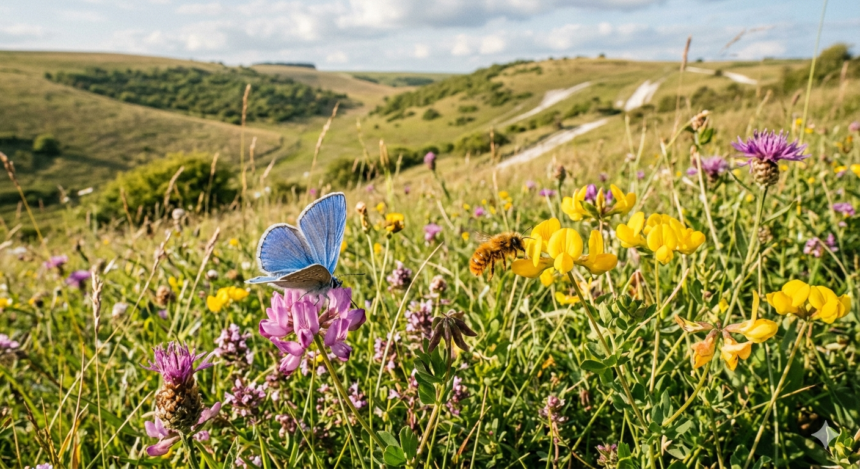
Chalk grasslands—some of the most biodiverse habitats in the UK—are vanishing. Environmental groups are now calling for a nationwide restoration effort, warning that the decline of these thin-soiled, lime-rich meadows is pushing rare butterfly and bee species toward local extinction.
The UK has lost approximately 80% of its chalk grassland since the 1940s. Intensive farming and a lack of traditional grazing have allowed scrub and woodland to encroach, choking out the specialized wildflowers that rare insects like the Adonis Blue butterfly and the Chalk Hill Blue rely on for survival.
“We aren’t just losing pretty flowers,” said Dr. Elena Rossi, an ecologist focused on invertebrate conservation. “We’re losing the entire architecture of a food web. When the horseshoe vetch goes, the butterflies follow. It’s that simple.”
Restoration efforts involve more than just clearing trees. Conservationists are pushing for “mosaic management,” which uses heavy cattle grazing to mimic the wild herbivores that once naturally maintained these landscapes. This keeps the grass short and prevents dominant species from shading out the delicate flora that insects need to thrive.
The economic argument for restoration is gaining traction. Beyond biodiversity, these grasslands act as natural carbon sinks and provide essential flood management. Yet, government funding remains fragmented. While small-scale projects in the South Downs and the Cotswolds have shown success, critics argue that these isolated pockets aren’t enough to prevent long-term population crashes.
The scale of the challenge is daunting. Restoring a single hectare of degraded chalk grassland can take years of intensive soil management and seed banking. Even then, there is no guarantee that the insects will return if the surrounding landscape remains hostile or fragmented.
For now, the focus remains on connecting these isolated patches. The goal is to create “nature corridors” that allow species to move between protected sites, effectively expanding their range without the need for massive land acquisition.
If these corridors aren’t established, experts fear that current restoration efforts will merely preserve isolated museums of nature rather than functional, living ecosystems. The insects, meanwhile, are running out of ground.